Total Pageviews

Showing posts with label Deuteronomy. Show all posts

Sunday, March 21, 2021

Bible in One Year Day 80 (Numbers 35-36, Deuteronomy 34, Psalm 121)

 You may subscribe yourself at the Ascension site here and receive notifications in your email, or just follow along on my blog.  Bible in One Year Readings Index 


Day 80:  City of Refuge 

Chapter 35: The Portion of the Levites and Manslaughter and Murder Defined


Numbers 35:1-8 The Portion of the Levites

The Levities were not allotted ancestral farmland to own individually like the members of other tribes (see Num 18:20-24).  They were, however, to receive permanent residences for themselves and pasture land for their livestock in forty-eight walled towns with adjoining fields.  Six of those towns were to be designated "cities of refuge".  The measurements for these communities took into account the possibility of their growth and the initial size of the towns.  Joshua Chapter 21 records the execution of these provisions for the Levities and the names and locations of the towns (also see 1 Chr 6:54-81).  

Numbers 35:9-15 The Command to Establish Cities of Refuge

Question: Why were cities of refuge necessary?  See Ex 21:12-14Dt 4:41-4319:1-13Josh Chapter 20.

Answer: Cities of refuge were necessary to protect someone from blood vengeance before a trial could be held with witnesses.

The three cities of refuge on the east side of the Jordan River were:

  1. Bezer in the desert tableland of Reuben
  2. Ramoth in Gilead of Gad
  3. Golan in Bashan in the Upper Gilead of Manasseh

The three cities of refuge on the west side of the Jordan River were:

  1. Kedesh in the Galilee highlands belonging to Naphtali
  2. Shechem in the central highlands of Ephraim
  3. Kiriath-Abra (Hebron) in the highlands of Judah

Numbers 35:16-21 Legislation Defining the Difference between Manslaughter and Murder

The Hebrew term for a kinsman who takes on the duty described in verse 19 is go'el ha-dam, literally "the blood redeemer"; this phrase is used in verses 19, 21, 24, and 27.  He is a "redeemer" because he restores justice to the family and order to the community.  Jesus is our Kinsman-Redeemer who paid with His own blood, our blood-debt for sin and restored to mankind the Promised Land of heaven. 

In Numbers 35:16-34: God made a distinction between "murder", including deliberate negligence resulting in death, and unintentional killing (see Ex 21:13-14 and also the legislation in Ex 21:20-21Dt 4:4219:4-6).

Two kinds of homicide are listed:

  1. Striking and killing someone with a weapon.
  2. Intentionally delivering a death-blow with one's fist or an object.

In Numbers 35:19-21, the family of the murdered victim participated in the penalty phase.  An avenger (blood redeemer) was chosen (see verse 12) to carry out the execution.  When no blood relative came forward, the witnesses took on that role, for example the witnesses cast the first stones in a death by stoning verdict (Dt 17:6-7).

Numbers 35:22-34 The Procedure in Cases of Involuntary and Intentional Homicide

Question: How was the community to deal with violence that ended in loss of life?  In what way did the violence of premature death reach beyond the community?  What was the remedy?  

Answer: The land is holy because God dwells there and atonement must be made for the shedding of innocent blood.  The blood of the innocent victim polluted the land, even in the case of an unintentional killing. A death could only be avenged and the land cleaned of the pollution of death by the trial and death of the guilty murderer or by the exile of the person guilty of manslaughter to a city of refuge pending a trial.  Even after a trial, so long as the person guilty of manslaughter remained in exile, he was safe from a vengeance killing and was to remain in exile in the city of refuge until the death of the ordained high priest, whose death atoned for his blood guilt. When the high priest died and his blood debt was atoned, he was free to return to his normal life.  If, however, he stepped outside the boundaries of the city of refuge, the pollution was released again and the blood avenger was justified in destroying the cause of pollution.  In the death of Abel, his blood cried out from the ground to God for justice (Gen 4:10).  Cain was exiled to the east away from God, and could be killed if he returned but in exile the mark God put on him saved him from reprisal (Gen 4:11-16).  The death penalty in the case of intentional murder was not set until after the Flood (Gen 9:5-6).


Chapter 36:

Legislation Concerning a Woman who Inherits Ancestral Land and the Conclusion

Numbers 36:1-4 A Question of the Inheritance of Heiresses

This legation is an amendment to the commands concerning the inheritance of women in Numbers 27:7-8

Question: What question of inheritance did members of the tribe of Manasseh bring to Moses and the leaders?
Answer: Their concern was if a daughter inherited her father's lands and then married outside her tribe that the ancestral lands of that tribe would be lost forever, increasing the holdings of another tribe.

Numbers 36:5-12 Legislation on the Marriage Requirements for Heiresses


Question: What was the solution that Yahweh provided for the possible loss of tribal lands through the inheritance of daughters?
Answer: The law required that women who inherit must marry within the tribal family or forfeit their property.

Numbers 36:13 The Conclusion

In the Book of Deuteronomy, Moses will address his people for the final time before his death and before they begin the conquest of Canaan, the land God promised to give the descendants of Abraham, dispossessing the various peoples who inhabited the land.

Question: Why did God dispossess the peoples occupying the land of Canaan and why at this point in the history of the world? See Gen 1:1-2:4a9:25-2715:19-21Dt 32:824:1-2 and Jer 25:5.
Answer:  All the earth belongs to God.  He created it and He allows man to occupy the land, setting the boundaries for all nations. Since God owns the land, He has the authority to cast out those who defile the land by polluting the land with innocent blood, and as the Creator, He has the authority to give the land to whomever He chooses.  This was the case with the Canaanites who were occupying land that was intended for the descendants of Shem (Gen 9:25-27).  The different peoples who occupied the land: the Kenites, the Kenizzites, the Kadmonites, the Hittites, the Perizzites, the Rephaim, the Amorites, the Canaanites, the Girgashites, and the Jebusites (Gen 15:19-21), were allowed to live on the land, as God told Abraham, until "... the iniquity of the Amorites (the majority population)... reached its full extent" (Gen 15:16). 

At this point in the Biblical narrative, the waiting was over and the time had come for divine judgment to fall on the peoples of Canaan. The Israelites were not taking the land for their own gain; instead they were going to be God's agents in punishing the idol worshiping Canaanites, and they were to receive the land in gratitude and obedience.  They were commanded to destroy all Canaanite idols and places of worship when they entered the land, and they were forbidden to allow the Canaanites of live among them to lead the Israelites into their sinful practices.   

The wilderness journey was been completed, the iniquity of the Gentile peoples in Canaan has reached its height in the rejection of the True God and in their perverted sexual practices and human sacrifices, and God's new generation of holy warriors were ready to fulfill their destiny.  The Israelite's willingness to possess the land of Canaan was an act of obedience to God's will.  It was time for the Israelites to receive their promised inheritance-it was time for the struggle for the conquest of the Promised Land to begin.


Agape Bible Study 


Chapter 34: The Death of Moses


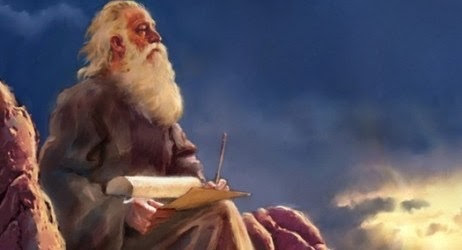
And now Moses, the faithful servant of Yahweh, having set Master's "house" in order, prepared for his own "exodus," his departure from this life.  From the time Yahweh first called him from the brush which earthly flames could not destroy, Moses' life's mission had been to cooperate in God's plan for the salvation of his people.  Mindful that the work to bring Israel to the Promised Land had not been completed, Moses asked Yahweh to appoint "a shepherd" over Israel to succeed him (see Num 27:15-21).  With the appointment and anointing of Joshua and with his final homilies and his renewal of the covenant with the new generation accomplished, his mission was completed.


Moses Overlooking the Promised Land

Deuteronomy 34:1-4
Moses Views the Promised Land from Mt. Nebo

"Gilead as far as Dan" was the northern limits of the Promised Land.  The land of Naphtali was in the upper Galilee.  Ephraim and Manasseh occupied the central region of the Promised Land, and land of Judah came to include all of those sites mentioned in verse 2b-3.  The Negeb was the southern most part of the Promised Land and Zoar was a town southeast of the Dead Sea where Lot escaped to with his daughters after the destruction of Sodom and Gomorrah (Gen 19:18-2230; also see Gen 13:10Is 15:5Jer 48:34).

Alone with God, Moses set out on his last journey (Dt 34:1-4).  He climbed to the highest peak of the mountain, approximately 4,000 feet up, a rapid ascent but not rugged.  The people's eyes must have followed him as he made his final journey.  At the top of the mountain, standing there alone, his old eyes would have taken in the full view of the Promised Land.  As Moses stood on the crest of the mountain, the sweep of the land would have seemed almost endless.  Turning his back on the river and looking east, Moses saw the fertile Transjordan plains stretching from the south lands bordering the Salt Sea (Dead Sea) to the north, pastures and rolling hills that were now the homeland of  the tribes of Reuben, Gad and the two clans of Manasseh. Then, turning and looking below slightly to the southwest, he might have seen that the land descended in terraces from the Salt Sea (Dead Sea) and beyond the Salt Sea the plains that turned into hill country and beyond the hills to the southwest the arid lands that became the Negeb, the southern most boundary of Canaan.  From the Negeb his eyes might have moved northeast until he saw the ridge of Hebron, and then, as his eyes traveled further north toward central Canaan, he might have seen the high mountain ridges that would be home to both the little village of Bethlehem and the ancient city of Jerusalem.  It was at Jerusalem where Yahweh's Sanctuary would find its final home and become "a place for Yahweh's name." 

Looking down from the mountain, Moses would have seen the winding course of the Jordan River passing near the ancient city of Jericho, resplendent with its many palm trees.  Continuing his gaze across the river slightly to the northwest into central Canaan his old eyes would have rested on the rounded tops of Mounts Ebal and Gerizim, the site of the next covenant renewal ceremony.  Perhaps God gave him vision beyond the mountains to the pleasant sight of the fertile Plain of Esdraelon (Plain of Jezerel) and beyond the plain to the shoulder of Mount Carmel.  Moses might have picked out a blue haze in the far distance beyond Mount Carmel that was the visible line of the Great Western Sea (Mediterranean).  Still farther northward perhaps he could have seen the outline of Mount Tabor and then straining his eyes and looking east of Mts. Carmel and Tabor he might even have had a vision of the beautiful lake country of the Galilee with its lush green grass and its rolling hills.  Perhaps farther to the north he saw the snow-clad outline of Mount Hermon and, if the day was clear, perhaps the highest range of the mountains of Lebanon slightly to the east and the Golan Heights of Syria to the northwest.  How the site of this beautiful land must have filled his old heart with hope for his people and gratitude for the faithfulness of his God. 

Deuteronomy 34:5-9
The Death of Moses

The last lines of the Pentateuch were probably written by Moses' successor Joshua.  After Moses completed his last journey, he fulfilled his last act of obedience to Yahweh by dying.  Moses was born a slave, raised to be a prince, and spent the last forty years of his life as the intimate servant of the One True God.  He died just as Yahweh decreed; he died and was buried in the valley of Moab opposite the pagan shrine of Beth-Peor, the site of the new generation's fall from grace when the men were seduced into participating in pagan fertility rites (Num 25:18).  Moses was 120 years old.  Israel mourned for thirty days, and Joshua succeeded the great prophet as the leader of the nation of Israel.  You may recall that Aaron also died on a mountain top and was mourned for thirty days (Num 20:28-2933:38).  Aaron died in the 40th year of the Exodus, on the first day of the fifth month when he was 123 years old.  Moses probably died in the twelfth month of the liturgical year (February).  Thirty days later, the tribes crossed the Jordan River into Canaan on the 10th day of the first month, and they celebrated the Passover four days later in the Promised Land (Josh 5:10-12).

Question: According to verse 6, who buried Moses?

Answer: God

There was a peaceful transition from Moses as leader to Joshua.

David's son King Solomon also received the gift of divine wisdom to govern Israel (1 Kng 3:7-12). 

Question: What was the significance of Moses laying hands upon Joshua in verse 9?  Also see Num 27:18, 23.
Answer: It was a rite of investiture in which Moses' power and authority was transmitted to Joshua as witnessed by the people.

The same gesture in the Catholic Church is part of the ordination ceremony for priests, the consecration of those receiving the Sacrament of Confirmation, and in Rabbinic Judaism, it is part of the ceremony of rabbinic ordination, which is called semikhah, "laying [of hands]" (The JPS Torah Commentary: Deuteronomy, page 339).


Deuteronomy 34:10-12
Concluding Eulogy
This eulogy is a declaration of Moses' unique status among Israel's leaders.

The works of Moses as God's covenant mediator were never equaled by another Old Testament prophet.  Until the advent of the Messiah, Jesus of Nazareth, no prophet as great as Moses, who communicated directly with God, had come to lead the covenant people.  The eulogy picks up the theme of the future Messiah using Moses as a "type" for the future redeemer who will come as a "new Moses" to speak the words of God to the people, to lead a new "exodus" and to fulfill the promises God made to Abraham, Isaac, and Jacob by bringing a world-wide blessing to the nations of the earth.

St. Peter spoke of Moses in his homily to the "men of Israel" at the Jerusalem Temple sometime after the miracle of Pentecost, telling them that Jesus of Nazareth was the "new Moses," the prophet Moses prophesied would one day come to Israel speaking the words of God: Moses, for example, said "From among your brothers the Lord God will raise up for you a prophet like me; you will listen to whatever he tells you.  Anyone who refuses to listen to that prophet shall be cut off from the people."  In fact, all the prophets that have ever spoken, from Samuel onwards, have predicted these days.  You are the heirs of the prophets, the heirs of the covenant God made with your ancestors when he told Abraham, "All the nations of the earth will be blessed in your descendants."  It was for you in the first place that God raised up his servant [Jesus of Nazareth] and sent him to bless you as every one of you turns from his wicked ways'  (Acts 3:22-26).


+++
A Daily Defense 
Day 80 Anathema 

CHALLENGE: “The Catholic Church says Protestants are damned. The Council of Trent contains many canons saying that if someone endorses a particular Protestant belief, ‘Let him be anathema’ (damned by God).” 

DEFENSE: This fundamentally misunderstands what an anathema was. It reads a non-Catholic understanding of the term into Catholic documents. In Church documents, the term “anathema” does not mean “damned by God.” It refers to a form of excommunication that used to be practiced.

When a person was excommunicated by anathema, a series of procedures had to be followed, including the local bishop warning the person he was committing a grave ecclesiastical crime and imperiling his soul.

If he failed to repent, an ecclesiastical court would try and convict him, then the bishop would hold a public ceremony where he was excommunicated (cf. 1 Cor. 5:1–5, 1 Tim. 1:20).

If he later repented, the bishop would perform another public ceremony, lift the excommunication, and welcome him back (cf. 2 Cor. 2:6–8). When Trent used the formula “Let him be anathema,” it indicated bishops could apply this form of excommunication to Catholics in their flocks who committed certain offenses.

The penalty did not take effect automatically. Thus, it never applied globally to Protestants. Not only were Protestants not subjects of Catholic bishops, the bishops had better things to do than conduct endless court procedures and ceremonies concerning people who were not part of the Catholic community.

In practice, the penalty of anathema was imposed rarely and only on those who continued to assert their Catholic identity. Eventually, it became so infrequent that it was abolished and does not exist today.

The current Code of Canon Law (1983) does not contain the penalty of anathema, and it abrogates all penalties it does not contain (cf. canon 6).

Excommunication still exists and is still applied if a Catholic embraces a heresy (canons 751, 1364; cf. canons 11, 1321–23, 1330). However, the form of excommunication known as anathema no longer exists. But even when it did, anathema did not judge the state of a person’s soul—something only God knows. It was a disciplinary measure intended to protect the Catholic community and to wake a Catholic up to the spiritual danger he was in.

Jimmy Akin, A Daily Defense: 365 Days (Plus One) to Becoming a Better Apologist

Saturday, March 20, 2021

Bible in One Year Day 79 (Numbers 34, Deuteronomy 33, Psalm 120)

 You may subscribe yourself at the Ascension site here and receive notifications in your email, or just follow along on my blog.  Bible in One Year Readings Index 


Day 79:  Psalms of Accent 


Chapter 34: The Boundaries of Canaan and the Allocation of the Land

That day Yahweh made [cut] a covenant with Abram in these terms: 'To your descendants I give this country, from the River of Egypt to the Great River, the River Euphrates ...
Genesis 15:18

Numbers 34:1-13 The Boundaries of The Promised Land for the Nine and a half Tribes
The reference to Zin is probably a point along the boundary rather than the wilderness; it was on the border with Edom (see 13:212620:1).  The Salt Sea is the Dead Sea.

The Ascend of Scorpions [Akrabbim] is an unknown site. Kadesh-Barnea was the site of the reconnaissance of Canaan and the death of Miriam (Num 13:25-2620:1).  Hazar-addar is mentioned as Hezron and Addar in Joshua 15:3

The Great Sea is the Mediterranean.

Mt. Hor in this passage is in the north, and it is not the southern mountain where Aaron died and Eleazar was invested as High Priest (Num 20:22-29). 

For the Pass of Hamath [Lebo-hamath] see Numbers 13:21. Zedad was probably a site northeast of Damascus and east of Byblos.  The northern border followed an imaginary line drawn from the Mediterranean to Mt. Hor which was probably in the mountains of Lebo (pass) -Haamat, the furthest extend of the reconnaissance of the spies in Numbers 13:21.  From the Pass of Hamath, the border extended inland to Zedad (Sedad), probably a site located east of the road from Damascus to Aleppo, Syria (see Ez 47:13).

Ziphron and Hazar-Enan are unknown sites, but Hazar-Enan is mentioned in Ezekiel's vision of a restored Israel (Ez 47:17-1848:1) and most scholars place the site about seventy miles northeast of Damascus (Levine, Numbers, page 535).

Shepham, Riblah and Ain are unknown sites.  Ain meant "spring, well".  The Sea of Chinnereth is the Sea of Galilee. 

The boundary continued to "run down" by the mountain ridge abutting the Sea of Galilee, to the east, along the Jordan to the Dead Sea. 

The "Promised Land" described in this passage is the land west of the Jordan River only (see verses 10-12; 32:22).  If you consult a map, the boundaries reached from the Jordan River to the Mediterranean.  In the south the land began near Raphia in the area of the Gaza strip and extended north of the pass of Hamath, on a line to the east of modern Beirut (ancient Byblos), Lebanon.  The land then extended southeast to Damascus and the Bashan. Moving to the south, the region of the Galilee and its lake (Sea of Cinnereth) was included, extending along the Yarmuk valley and following the Jordan River as far south as the Dead Sea (Salt Sea) but excluded (in this section) the area to the east of the Jordan River: the Gilead of northern Transjordan and southern Transjordan.  The boundary then extended as far south as Kadesh-Barnea and the Torrent of Egypt, the modern Wadi El-'Arish that constitutes a natural barrier between the Negev and the Sinai Peninsula, and then turned west and north to include the entire Mediterranean coast.  Since the Israelites were not obedience to God's commands concerning the forced eviction of the inhabitants of Canaan, they never fully occupied the boundaries God set for them.

This passage and Ezekiel 47:13-21 provide the most detailed descriptions of the frontiers of Canaan found in the Bible.  These are the ideal boundaries that the Israelites were promised if they lived in obedience to the commands and prohibitions of Yahweh.  Unfortunately, the Israelites were unwilling to provide such obedience and never achieved these actual boundaries at any time in Israel's history, especially in the case of the western border. The closest they ever came to achieving these borders was during the reigns of David and Solomon.

Numbers 34:14-15 Moses Conveyed Yahweh's Boundaries for the Promised Land to the People


See Numbers 32:33-42.  The tribes are listed south to north except for Manasseh, which is listed before the more southern tribe of Ephraim, perhaps because Manasseh was the firstborn of Joseph (Gen 41:40-52).

Numbers 34:16-20 The Tribal Leaders in Charge of the Allocation

The only names from the old generation are Eleazar, Joshua, and Caleb.  The other tribal leaders are all from the new generation of Israelites. Eleazar has, of course, replaced Aaron as the High Priest (20:22-29) and Joshua will replace Moses as the people's civil leader when they cross into Canaan (27:12-23).  Also see Numbers 26:52-56

Agape Bible Commentary 

Chapter 33: The Last Testament of Moses

The tribes mentioned in Moses' blessing are Reuben, Judah, Levi, Benjamin, Joseph, Zebulun and Issachar, Gad, Dan, Naphtali, and Asher. 

Question: What tribe is missing from the list?
Answer: The tribe of Simeon.

It is difficult to understand why the tribe of Simeon is missing from the list.  Later, long after the tribes settle in the Promised Land, the tribe of Simeon will be absorbed into the tribe of Judah.  Either this section is a later addition, after Simeon had been absorbed into Judah, or at some point the verse or verses mentioning Simeon was lost from the surviving Hebrew texts.  The last mention of the tribe of Simeon is that towns belonging to Simeon were included in King Josiah's 7th century BC religious reforms (2 Chr 34:6). 


Moses' Final Blessing 


Deuteronomy 33:1-29

Moses' Poem Blessing the Tribes-the Introduction


In the Song of Deborah (Judg 5:1-31), Yahweh is also described as coming out from Seir (Judg 5:4).  The imagery is that God rose like the sun upon His people, illuminating them above over all other peoples in their divine election.  The exact location of both Sinai and Seir is not certain, but in Scripture Seir is practically synonymous with Edom in the southern Transjordan (see Gen 36:69).  Mount Paran is probably the highest peak in the mountain range of Seir.  In this passage Yahweh is described as coming from Sinai, which is near to the southern Transjordan territory of Edom.  This would mean Sinai was closer to Midian lands on the northeastern side of the Sinai Peninsula than to the traditional location identified in the southern Sinai Peninsula. 

The "assembly of Jacob" probably refers to the assembly of the entire people for the covenant ratification ceremony in Exodus chapter 24. The reference to a "king in Jeshurun" refers to Yahweh who became Israel's sovereign Lord at the covenant ratification ceremony.  The "heads of the people" who gathered are probably the leaders of the people who witnessed Yahweh's coronation in the sacred meal of covenant ratification (Ex 24:9-11).  As in other nations, it is the people or their leaders who legitimates the people's acceptance of the king's sovereignty.

Reuben:

In Jacob's death-bed blessing, he disinherited Reuben from his position as "first-born" because he committed adultery/incest with Jacob's concubine (Gen 35:22).  The tribe was still important in the days of the Judges, but in the Song of Deborah they stayed at home to guard their flocks instead of joining the Israelites in battle, perhaps because they had so few fighting men (Judg 5:15b-16).  Eventually the tribe of Reuben disappeared, as did the other tribes located in the Transjordan.

Judah:

This is a surprisingly short blessing for Judah considering the present (in Moses' day Judah led the march of the tribes) and later prominence of this tribe.  Judah had control of the southern part of the Promised Land extending from Jerusalem (after absorbing the tribe of Simeon), and in the days of David and Solomon, Judah had control of the entire nation of Israel.  Moses' blessing anticipates a time of war when Judah will need Yahweh's help in defeating enemies.

Levi:

The first part of the blessing is directed to each of Aaron's descendants who serve during their lifetimes as High Priests and have charge of the two cultic devices for determining the will of God.  The second phrase of verse 8 is directed to the rest of the Levites who serve as lesser ministers and who, along with the other Israelites, tested Yahweh at Massah and Meribah in the two incidents of water from the Rock (Ex 17:1-7Num 20:1-13). 

Benjamin:

In the allocation of tribal lands, the small tribe of Benjamin occupied strategic territory between the two most powerful tribes, Judah to the south and Ephraim to the north.  The blessing characterizes the tribe as "God's beloved," and may reflect the younger, beloved brother status of Benjamin to Joseph, his elder brother (the two sons of Rachel), who sought to keep Benjamin with him in Egypt.  The phrase "rests between his shoulders" is the image of a child being carried on his father's back, and is used as a metaphor for God's loving protection over Benjamin.

Joseph:

Joseph is the ancestor of the two tribes of Ephraim and Manasseh.  Joseph's blessing is similar to the blessing by Jacob (Gen 49:22-26) where the word nazir (consecrated, dedicated) in verse 16 is also used for Joseph in the last line of Genesis 49:26.  The emphasis on fertility may be based on the Hebrew meaning of the name "Joseph" (yosef means "may he increase") and on the meaning of Ephraim, which is explained in Genesis 41:52 as meaning "God has made me fertile."  The blessing says that Joseph has the favor of "him who dwells in the Bush," a reference to the presence of Yahweh/the angel of Yahweh that was revealed to Moses in the "burning bush" (Ex 3:2-6).

The title "first-born" applied to Joseph is both a reference of his physical birth as the firstborn of Rachel and to his father elevating him above his older brothers as the acknowledged principal heir, the "first-born" in rank.  The blessing focuses on the fertility of the territory of the tribes of Ephraim and Manasseh and the health of the people (thick hair was considered a sign of health and vigor).  Ephraim occupied the southern part of the central highlands and was the more prominent of the two (even though the territory Ephraim occupied was smaller than Manasseh).  It will be a prince of Ephraim who will lead a successful revolt against the Davidic king Rehoborm (son of Solomon), breaking with Judah to form the Northern Kingdom of Israel (1 Kng 11:26; 12:20).  The majority of the tribe of Manasseh occupied the northern part of the central highlands of Canaan, and two clans occupied Bashan and Gilead in the Transjordan.

Zebulun and Issachar:

The heading only names the tribe of Zebulun, but the blessing also includes Issachar.  Zebulun and Issachar were the two youngest sons of Jacob's wife Leah; their order is reversed since Issachar was the fifth and Zebulun the sixth son born to Leah (Gen 30:18-20).  They are also mentioned side-by-side in Jacob's death-bed blessing (Gen 49:13-14) and in the Song of Deborah (Judg 5:18).  Both tribes were assigned neighboring territories in the lower Galilee and in the Jezreel Valley. 


Gad:

Verse 20 either refers to the size of Gad's territory or that Gad's fertility has increased the nation of Israel.  Gad selected the fertile pasturelands of the Transjordan as the tribe's territory.  He has come at the head of the people might refer to the agreement Gad and Reuben made with Moses (Num 32:20-27).  In exchange for permission to occupy lands in the Transjordan, they agreed to be the vanguard of the Israelite army in the conquest of Canaan, a promise which Gad faithful carried out.

Dan:

After the conquest of Canaan, Dan was assigned lands situated to the west of Benjamin, but the tribe of Dan was unable to subdue the local inhabitants and emigrated from that territory to settle in the extreme northern part of Israel at Laish (Leshem), which means "lion," at the foot of Mt. Hermon on the border with Bashan (Josh 19:40-48).

Naphtali:

Naphtali occupied the rich lands of the upper Galilee, well-watered lake land, rich in forests, fruit trees, and fertile pastures.  They occupied the western and southern shores of the Sea of Galilee.

Asher:

Asher's lands were situated in the hill country of the upper Galilee, between the lands of Naphtali and the Mediterranean Sea.  It was an area rich in olive trees and the tribe became a major producer of olive oil. The tribal lands were also crossed by one of the major trade routes, "the Way of the Sea."  As a territory transected by an international highway, the tribe needed strong defenses to defend against invaders from both the north and northeast.  The title most blessed of the sons probably refers to Asher's name, which means "blessedness" (Gen 30:13).

Conclusion of Moses' Blessings:

Moses' final blessing is directed to the entire nation of Israel.  Israel is blessed to have a God who is like none other (verse 26).  The epithet "God of old" or "ancient God,"  'elohei kedem, is synonymous with "everlasting God" (Gen 21:33 NAB; Is 40:28Rom 16:26).  It is consistent with the concept that God has existed since beyond time, and like this passage, Psalm 90:1-2 also connects God as a refuge with His eternity: Lord, you have been our refuge from age to age.  Before the mountains were born, before the earth and the world came to birth, from eternity to eternity you are God.

Verses 27b-28: God drives out Israel's Canaanite enemies to give His people a land rich in grain and grapes, which He waters from heaven. This is a reminder that the Israelites must rely on God to water their land, unlike the land of Egypt that had a steady supply of water from the Nile River. 

Verse 29 reminds the Israelites of their unique blessedness comes from belonging to the One True God.  He brings them victory over their enemies; He is a protective shield and a victorious sword; metaphors often applied to God (Gen 15:1Ps 3:418:33128:784:12).  


+++
A Daily Defense 
Day 79 The Dating of Acts

CHALLENGE: “Acts isn’t reliable history. It was written long after the events.”

DEFENSE: The date that the book of Acts was written does not pose a problem for its historical reliability.

We observe elsewhere the general subject of Acts’ reliability (see Day 193). Raymond Brown proposed a late date for Luke and Acts of A.D. “85, give or take five to ten years” (An Introduction to the New Testament, 226, 280). If so, Acts would have been written approximately fifty-two years after the earliest events it describes and twenty-five years after the latest. 

All of that is within living memory. However, Acts was probably written earlier, for its narrative suddenly stops while Paul is under house arrest, awaiting trial before Nero.

Paul’s journey to Rome is a major theme in the book, set up as early as Acts 9:15–16. It comes into focus when Paul announces he must see Rome after visiting Jerusalem (Acts 18:21). He insists on going to Jerusalem, knowing he will be arrested (Acts 20:22–23, 21:10–14).

When that occurs (Acts 21:33), the story of his journey to Rome takes over the narrative and dominates the last seven chapters of the book (one fourth of its twenty-eight chapters). 

Yet it ends inconclusively, with Paul spending two years under house arrest, with no word of what happened at his trial. Given the amount of drama building up to the trial, this would make no sense if the result of Paul’s trial were known. If he was condemned, Luke would have the story of his glorious martyrdom, or of his innocent suffering on account of Christ, to record. If he was acquitted (as other sources suggest he was on this occasion), Luke would have recorded his glorious vindication. 

The logical explanation for why the book includes neither of these is that the trial had not yet happened, and that tells us when Acts was published: two years after Paul’s Roman imprisonment began. Many scholars think Paul’s imprisonment began around A.D. 60, giving us a date of 62 for Acts. A stronger case, though, is that it began in 58, giving us a date of 60 for Acts (see Jack Finegan, Handbook of Biblical Chronology, 2nd ed., and Andrew Steinmann, From Abraham to Paul ). 

Jimmy Akin, A Daily Defense: 365 Days (Plus One) to Becoming a Better Apologist

Friday, March 19, 2021

Bible in One Year Day 78 (Numbers 33, Deuteronomy 32, Psalm 118)

 You may subscribe yourself at the Ascension site here and receive notifications in your email, or just follow along on my blog.  Bible in One Year Readings Index 

Day 78: The Song of Moses 

Chapter 33: The Stages of the Journey from Egypt to the Plains of Moab

This chapter lists the campsites on the stages of the journey from Egypt to the Plains of Moab on the east side of the Jordan River across from the Canaanite city of Jericho.  In addition to the campsites, the list includes the mention of several geographical features or landmarks along the journey and two short additions of historical information on the mission of Moses (verses 2-4) and Aaron (verses 38-39); recording that both Moses and Aaron obeyed the commands of Yahweh (verses 2 and 38).  Most scholars break the list into three sections (Ashley, Numbers, page 624):

  1. The 12 campsites from Egypt to Sinai (verses 5-15).
  2. The 21 campsites from Sinai to the second visit to Kadesh (verses 16-36).
  3. The   9 campsites from Kadesh to the Plains of Moab (verses 37-49).

The list of the Israelites encampments, not counting the starting off point in Rameses, Egypt and the last encampment on the Plains of Moab, numbers 40 campsites on the journey; however, there are a total of 42 listed sites of the Israelite encampments beginning with Rameses and ending with the last encampment on the Plains of Moab.  

The list in Chapter 33 is not, however, a complete list.  Some of the encampments already mentioned in previous chapters, like Shur (Ex 15:22), Taberah (Num 11:3), Hormah (Num 14:4521:1) and sites mentioned in Numbers 21:11-13 and 16-19 are missing from the list. 17 other sites are only mentioned in this chapter and nowhere else. 

Scholars, as far back as the time of Origen in the third century AD, have struggled with the question as to why only these campsites were named and others are missing.  Christian scholar Origen of Alexandria (the famed director of the School of Christian Catechetics in Alexandria, Egypt) believed it was the inspired writer's intent to manipulate the list to yield a symbolic number of encampments.  

He suggested that the list reflected an allegory of the Christian's testing in the journey from spiritual re-birth to union with God in eternity when the victorious Christian crossed over the "river" of death into the Promised Land of heaven. 

Whatever the reason, it seems obvious that the inspired writer has manipulated the list naming encampments between Rameses and the Plains of Moab across from Jericho by purposely failing to list sites already mentioned and including others never mentioned again to yield a specific number of 40 or 42 sites, something he knew the careful reader would not fail to notice. 

One theory is that the inspired writer wanted to represent the 40 years of wilderness wandering in the list of encampments.  In Scripture the number 40 signifies testing and/or consecration (it is a multiple of 4 and 10, numbers signifying the earth and divine order).  For example:

  • The series of 40-day periods in the Great Flood (Gen 7:412178:6).
  • The Israelites ate manna for 40 years (Ex 16:35).
  • Moses was on Mt. Sinai for two 40-day periods (Ex 24:1834:28).
  • The Israelite spies were sent to reconnoiter Canaan for 40 days (Num 13:25).
  • Israel wandered for 40 years in the wilderness (Num 14:3332:13).
  • David ruled Israel for 40 years (2 Sam 5:4).
  • Jesus was tested for a 40-day period in the wilderness (Mt 4:2Mk 1:13Lk 4:2).
  • Jesus taught the Church for 40 days before His Ascension (Acts 1:3).

42 names in St. Matthew's genealogy, yielding an intentional 42 names of campsites. 42 is a number that appears again in 2 Kings 2:23-24 and in the Book of Revelation (Rev 11:213:5).  The number 42 is the product of 6 times 7.  7 is one of the "perfect" numbers, signifying fullness and perfection, especially spiritual perfection, and 6 is the number of man (Gen 1:26-31) and especially signifies man's opposition to God's plan for mankind's destiny. 

Examples of the symbolic nature of the number 42 can be applied to these passages:

  • The 42 stages of the Israelite's journey marking their conflict with the will of God for Israel's future.
  • The 42 young men who mocked God's choice after the ascension of Elijah and the transfer of his authority to Elisha (2 Kng 2:23-24). 
  • St. Matthew's manipulated list of 42 names in Jesus' genealogy (Mt 1:1-17).
  • In the Book of Revelation, the number 42 signifies the conflict of the Beast together with his offspring, the seed of the serpent, that stand in opposition to Christ and the Church for a symbolic 42 months (Rev 11:213:5). 

Therefore, in Scripture the number 42 appears to symbolize a connection/conflict between man and the Spirit of God.  For Israel this number can be seen as the significance of working out Israel's opposition to the destiny God willed for Israel in His plan for man's salvation as they journeyed from Egypt to the Plains of Moab.


Numbers 33:1-49 The Stages of the Exodus

Ever since Exodus Chapter 24, we have been told that Moses recorded the events of the Exodus experience (Ex 24:434:27).  This passage provides evidence that Moses' record of events had continued after the covenant formation at Mt. Sinai.  Since the information that Moses wrote down the stages of the journey is recorded in the third person, it may have been added by another inspired writer, possible Joshua.

This is information that sets a definite date to the events in Exodus 12:29-36 and 13:17.  The Israelites left Egypt on the day after the Passover sacrifice, on the 15th of Abib (the first morning what became the Feast of Unleavened Bread), as the Egyptians were burying those who died in the tenth plague.   On the 15th of Abib/Nisan, 30 AD, the morning after the sacred meal of the Passover victim (Last Supper), Jesus was condemned by Pilate and was crucified that morning about 9 AM (Mk 15:25).

The Israelites began their journey at Rameses and marched toward Succoth with about six hundred thousand fighting men (Ex 12:37).  Most Scholars identify Rameses as the Egyptian city Pi-Rameses that was built on top of the ruins of Avaris, the old Hyksos capital.  Avaris was destroyed when the Egyptians drove out the Hyksos, in c. 1550 BC.  The Egyptians built a large storage facility and military compound on the site Avaris and called it Pi-Rameses, an Egyptian name meaning the "city/place of the god Ra who is born".  It was located on the eastern delta of the Nile near where the Israelites lived Goshen.  This site, which was also a region of the delta, is mentioned in Genesis 47:11, in Exodus 1:11 and in Exodus 12:37.  The campsite of Succoth is Sukkot in Hebrew and means "tents", as in the Feast of Tabernacles which is called in Hebrew "Sukkot".

The same information is recorded in Exodus 13:20.  Etham is the Egyptian name for the Hebrew "Shur" (Ex 15:22); in Hebrew and in Egyptian the place-name means "wall" or "formation".

The same information is recorded in Exodus 14:2.  Instead of marching northeast in the quickest route out of Egypt, the Israelites apparently turned southward before the Egyptians caught up with them.  Baal-Zephon was a shrine dedicated to the Canaanite god Baal.  The literal translation is "Lord-winter (north)".  Migdol is the Hebrew word for "watchtower".

The same information is recorded in Exodus 15:22-23, but here there is only a brief mention of the miracle of the Red Sea crossing.  It was at Pi-Hahiroth ("mouth-of-the-gorge" or "mouth of the canal") that God parted the sea for the Israelites to cross, and it was at Marah, a Hebrew word meaning "bitter", that the miracle of the bitter water turned sweet took place (Ex 15:23-26).

Question: When did the Israelites enter the wilderness of Sin?  See Ex 16:1.

Answer: They entered the desert of Sin exactly one month after leaving Egypt, on the 15th of the second month. 

This camp may have been where the Israelites tested God and the first miracle of the quail and manna took place (Ex 16:2-36), which is omitted from the Numbers narrative.  

Question: What two significant events happened at Rephidim?  See Ex 17:1-16).

Answer: It was at Rephidim that the Amalekites attacked the Israelites and were defeated.  At Rephidim the people complained because of their thirst, and God sent Moses and the elders ahead to Mt. Sinai where Moses, according to God's command, struck the Rock and life-giving water poured out. 

It was at the camp at Mt. Sinai that Jethro brought Moses his wife and children (Ex 18), and it was at Mt. Sinai that the Israelites encamped from the third month after leaving Egypt (Ex 19:1) until the 20th day of the second month of the second year after leaving Egypt (Num 10:11).

While in the camp at Sinai, the Israelites witnessed the Theophany of God, received the Ten Commandments, ratified the Sinai Covenant, built the Sanctuary, and received the commands and prohibitions of the Law.

Here the list skips Taberah (Num 11:1-3) and jumps to the campsite where the Israelites rejected the gift of the manna, complained that there was no meat and longed for the foods of Egypt (Num 11:4-6).  It was at this site that God ordered the selection of the seventy elders to assist Moses (Num 11:16-30), gave the second miracle of the quail and manna together, and the people experienced God's plague of judgment for their ingratitude and for challenging Moses and Aaron's leadership (Num 11:31-35).  The Hebrew name of the campsite means "grave of longing/craving".

Hazeroth was where Miriam and Aaron challenged Moses' authority (Num 12:1-16).  Hazeroth means "stockade" and made have been the site of an old military outpost.

Rithmah means "juniper tree".  None of the stations in verses 18-29 is mentioned elsewhere in Scripture and none have been identified.  

19 They left Rithmah and encamped at Rimmon-Perez.

In Hebrew the word rimmon means "pomegranate"; therefore, Rimmon-Perez means "pomegranate spring".

20 They left Rimmon-Perez and encamped at Libnah. 

The name of the campsite means "white tree".

21 They left Libnah and encamped at Rissah.

In Hebrew rissah means "ruin."

22 They left Rissah and encamped at Kehelathah.

Hebrew root of this place-name is kahal means "called out" as in an assembly and kehelath means "gathering place".

23 They left Kehelathah and encamped at Mount Shepher.

Shepher/Sepher means "beautiful"; Har-Seper means "beautiful mountain".

24 They left Mount Shepher and encamped at Haradah.

Haradah means "trembling".  It is possible the name of the campsite may represent the same type of symbolic name commemorating an historic event at Kibroth-ha-Taavah in Numbers 33:16-17.

25 They left Haradah and encamped at Makheloth.

26 They left Makheloth and encamped at Tahath.

In Hebrew Tahath/Tahat means "the foot of a mountain" as in betahtit hahar "at the foot of the mountain" in Exodus 19:17.

27 The left Tahath and encamped at Terah.

Both these sites appear elsewhere in Scripture as personal names.  Terah was the name of Abraham's father (Gen 11:24-32).  Origen writes that the name means "contemplation".

28 They left Terah and encamped at Mithkah.

Levine says Mithkah means "sweet/sweetness" and probably means they named the campsite for a well with good water (as opposed to the bitter brackish water they found at Marah).  

29 They left Mithkah and encamped at Hashmonah.

Levine found no clear meaning for this Hebrew name, but Origen wrote that it means "bones" (Homilies on Numbers 27.12).

30 They left Hashmonah and encamped at Moseroth.

The location of the sites mentioned in verses 30-34 are unidentified, but Bene-Jaakan and Jotbthah are identical with sites mentioned in Deuteronomy 10:6-7.  Moseroth means "reins, straps" and it is possibly the same site as Moserah in Deuteronomy 10:6-7.

31 They left Moseroth and encamped at Bene-Jaakan.

Bene-Jaakan (son of Ya'aqan/Ya'akan) is also in the list of sites in Deuteronomy 10:6-7 where it occurs as Be'erot Bene Ya'aqan, "the wells of the sons of Ya'aqan". 

32 They left Bene-Jaakan and encamped at Hor-Gidgad.

This site may be rendered as Gudgod in Deuteronomy 10:6-7. The Septuagint and St. Jerome's Vulgate identify this site name with a mountain as Har-Gidgad.

33 They left Hor-Gidgad and encamped at Jotbathah.

Jotbathah is a campsite listed in Deuteronomy 10:6.

34 They left Jotbathah and encamped at Abronah.

35 They left Abronah and encamped at Ezion-Geber.

Abronah has been identified with Tell el-Kheleifeh at modern Elath and Ezion-geber is identified with nearby Akaba (JPS Torah Commentary: Numbers, page 281).  Ezion-geber is mentioned in Deuteronomy 2:8 and 1 Kings 9:26 where it is recorded that King Solomon's fleet was anchored at a port by this name, located near Eloth on the shore of the Yam Suph (which has to be the Gulf of Aqaba). 

36 They left Ezion-Geber and encamped in the desert of Zin, that is, at Kadesh.

The Israelites camped at the oasis of Kadesh, which was probably the same Kadesh-Barnea where the Exodus generation was condemned to forty years of wandering.  It was at this encampment that Miriam died (Num 20:1); see the discussion concerning the location of Kadesh in Lesson 9.

See Numbers 20:22-29 for the account of Aaron's death and 21:1-3 for the account of the surprise attack by the Canaanites and their defeat by the Israelites, which is missing from this part of the narrative.  This part of the narrative provides information not found in Numbers chapter 20:

  • Aaron's death was in the 40th year after leaving Egypt
  • He died in the 5th month, which probably means the month of Ab in July/August of the liturgical calendar (see the Liturgical and Civil Calendar in the Charts/Pentateuch section). 
  • He was 123 years old

Deuteronomy 10:6 places Aaron's death and Eleazar's ordination at Moserah instead of Mt. Hor as it is in Numbers 20:23 and 33:38, but Moserah may be the name of the campsite at the base of the mountain.  

40  The king of Arad, the Canaanite who lived in the Negeb of Canaan, heard of the Israelites' arrival.

This verse is almost a verbatim beginning of the story of the Israelites' battle with the Canaanites in Numbers 21:1-3, but the Canaanite surprise attack, capture of Israelites, and ultimate defeat is missing. 

41 They left Mount Hor and encamped at Zalmonah.

 42 They left Zalmonah and encamped at Punon.

Numbers 21:4 records that they skirted the land of Edom, probably via these two sites.  In antiquity, Punon was a center for the mining and smelting of copper.  It was probably the site of the attack of the snakes and the image of the copper snake (Num 21:4-9).

 43 They left Punon and encamped at Oboth. 

Numbers 21:10 recorded that they encamped at Oboth and then encamped at Iye-abarim in the wilderness bordering on Moab to the east (Num 21:11).

44 They left Oboth and encamped in Moabite territory at Iye-Abarim. 

Iye-Abarim means "the ruin of Abarim" or perhaps "the ruins of the passes".  Verses 41-49 and Deuteronomy 2:2-1329 give the impression that the Israelites began to go around Edom but then cut through Edom and Moab on their march to their last camp on the Plains of Moab across from Jericho. According to Numbers 21:12-13, the Israelites' next encampment was at the wadi of Zered (Num 21:10-13), and from there they set out and encamped beyond the Arnon river gorge in the wilderness on the border of Moab in territory they conquered from the Amorites (Num 21:13-1621-35).

45 They left Iyim and encamped at Dibon-Gad. 

The left the "ruins" (-im is a plural ending in Hebrew) and then set up camp at Dibon-Gad, another name for the Moabite city of Dibon (Num 21:3032:3).  

46 They left Dibon-Gad and encamped at Almon-Diblathaim.

This site is likely the Beth-Diblathaim mentioned in Jeremiah 48:22; it is a site that is also named in the Mesha stela.

47 They left Almon-Diblathaim and encamped in the Abarim mountains facing Nebo.

See Numbers 27:12 and 32:38.  The Hebrew word almon means "hidden", perhaps suggesting something about the topography or location.  This site is named in an oracle against Moab (Jer 48:22).  From this site the Israelites marched to the mountains of Abarim "facing Nebo" (lipne Nebo). Mt. Nebo is identified as a specific peak of this mountain chain in Deuteronomy 32:47.  The mountain is 2,740 feet high (843 meters) and affords a spectacular view of the land on the west side of the Jordan River (see Num 27:1232:3).

48 The left the Abarim mountains and encamped on the Plains of Moab, near the Jordan opposite Jericho.  They encamped near the Jordan between Beth-ha-Jeshimoth and Abel-ha-Shittim, on the Plains of Moab.

Beth-ha-Jeshimoth, "place of the wasteland" (the Hebrew word yesimon means "wasteland/wilderness"), is mentioned in Joshua 12:313:20, and Ezekiel 25:9.  

According to Bishop Eusebius' 4th century AD travelogue, Onomasticon, the site is located by the Dead Sea, 10 miles (16 kilometers) south of Jericho (JPS Torah Commentary: Numbers, page 282).  

Numbers 33:50-56 God's Commands Concerning the Conquest of Canaan


The etymology of the Hebrew word maskiyotam is unknown and the translation as "painted images/figured objects/carved stones" is an educated guess by scholars (The JPS Commentary: Numbers, page 283; Gray, Numbers, page 450).  The same word is found in Lev 26:1Ez 8:12Prov 25:11.  "High places" refers to sites of pagan worship that were often located on hills or higher elevations, as in the story of Balaam and King Balak's pagan altar sites (Num 22:41-23:21427-30).

Numbers 33:50-34:29 is a complete section in which God gives divine instruction on conquering the land of Canaan (Num 33:50-56) and the Israelite's future lives there (Num 34:1-29).  The division of this section includes divine legislation on:

  1. The warning to drive out all the inhabitants and to destroy their cult objects and places of worship (Num 33:51-52a).
  2. The command to distribute the land according to lot and population (Num 33:53-56).
  3. The borders for the nine and a half tribes on the west side of the Jordan River (Num 34:1-12).
  4. The territory of the two and a half tribes on the east side of the Jordan River (Num 34:13-15).
  5. The Ecclesiastical authority and the civil leaders appointed to allot the land (Num 34:16-29).

Question: What did God promise was to be Israel's reward for obedience in verses 52-53?
Answer: If the Israelites conquer and evict the inhabitants of Canaan (vs. 52a) and destroy their cult objects and worship sites (vs. 52b), Israel will possess and settle the land (vs. 53a) according to God's promise (vs. 53b).

Question: Is our faith in God, like the Old Covenant Church, demonstrated by our obedience to His commands?  What did St. Paul write about the obedience of faith in Romans 1:3-716:26?  See CCC 143, 494, 2087.
Answer: Yes.  St. Paul wrote that obedience is implicit in the virtue of faith.  In faith we should commit ourselves to living out the commands of God and in submitting ourselves completely to Him, an example given to us by the Virgin Mary.  Obedience of faith is our first obligation.

God gave His assurance that Israel was to enjoy the fruits of their labor in the conquest of Canaan if they remain obedient to God.  But He repeatedly gave them the warning that they were to remain a holy people and they were not to adopt the sinful practices of the inhabitants of Canaan if God was to dwell among them. 

Question: If the Israelites were God's "chosen people", why did God threaten to punish the Israelites and to take the Promised Land from them if they adopted the practices of the heathen Gentiles they were to drive out of the Holy Land where God was to dwell with His people?
Answer: God is just and He could not tolerate sins in the Israelites for which He passed judgment on the occupants of Canaan.

Question: In spite of their many failures, God never abandoned the Israelites, even though He disciplined them for their unfaithfulness (Mal 3:6-21).  How is God's perseverance with Israel an encouragement to us? What Bible verses can you recall that promise such faithfulness on God's part despite our failures?
Answer: God's consistent faithfulness to Israel is our encouragement to persevere in righteousness.  Even when our spiritual failures threaten to engulf us and we become separated from peace and fellowship with God, He is not willing that any of us should be lost to Him. He constantly calls all of us to repentance and salvation (1 Tim 2:3-42 Tim 2:131 Pt 3:9).


Deuteronomy 32:1-44
The Song of Witness/Song of Moses

Question: What two witnesses are called to give evidence in this covenant lawsuit, according the regulations of the Law?  See Dt 31:28 and 32:1.
Answer: Heaven and earth.

Question: In the introduction, how does Moses describe the words of his teaching on the Law?
Answer: The words of Moses are compared to rain, dew, and fresh showers /droplets that nourish the grass like Moses' teaching of the Law (the Torah) nourishes and fosters spiritual growth among the covenant people.

Moses' teaching not only fosters faith among the present generation, but the Torah of Moses will also refresh the souls of future generations by telling them of the greatness of Yahweh their God.

The poem begins with Israel's divine election when Yahweh "fathered" His covenant people.  The word "rock" (tzur) is found eight times in the poem (each word will be underlined in the biblical text).  In Hebrew tzur is a word that refers to a mountain or cliff.  In reference to Yahweh the word projects the imagery of a rock fortress on high ground in which one may find safety. 

The word "rock" is a title for God and also a metaphor used for God that is found repeatedly in the Old Testament(1).  It is also:

  • A metaphor applied to Abraham: Consider the rock from which you were hewn, the quarry from which you were dug.  Consider Abraham your father ... (Is 51:1-2).
  • A title Jesus assigned to St. Peter when He first met Simon near the Jordan River: Jesus looked at him and said, 'You are Simon son of John; you are to be called Cephas-which means Rock (Jn 1:42).  It is a title Jesus assigned to Simon a second time at Caesarea Philippi: Jesus replied, 'Simon son of Jonah, you are a blessed man!  Because it was no human agency that reveled this to you but my Father in heaven, So I now say to you: You are Peter [petros = rock masculine] and on this rock I will build my community (Mt 16:17-18)(2).
  • A title that St. Paul applied to Christ ... and all drank the same spiritual drink, since they drank from the spiritual rock which followed them, and that rock was Christ (1 Cor 10:4).

Question: How is the word "Rock" used in a description of Yahweh in verse 4?  What are Yahweh's qualities in the Hebrew text?
Answer: Five adjectives are used to describe God's complete perfection:

  1. He is just
  2. He is faithful
  3. He is not false
  4. He is righteous
  5. He is upright

Question: What is Israel's behavior in contrast to the perfections of Yahweh?
Answer:

  1. They are corrupt
  2. They do not act as His children
  3. They are defective
  4. They are a corrupt generation
  5. They are crooked

Question: When did Yahweh accuse the Israelites of being a corrupt/evil generation previously?  See Num 14:27-35.
Answer: When they failed to believe God would give them victory over the Canaanites at Kadesh-Barnea.  It was this failure that led to the additional 38 years of wandering in the wilderness until every member of that generation over 20 years of age died.

Question: What does the song ask the people to do in verses 6-9?

Answer:

  1. To acknowledge that He redeemed and established them as a people (verse 6)
  2. To remember their history (verse 7)
  3. To acknowledge that God gave them special status among the world's nations as His people (verses 8-9)

Verses 8-9 offer a description of Israel's divine election. The poem reminds the Israelites that God ordered the world with the foreknowledge that He would establish the nation of Israel to be "His portion" and the "measure of His inheritance" (verse 9).  The "inheritance" language means that God chose to "dwell" among Israel.

Verse 10 recounts God's protection over the people from the time of the Exodus, and verses 12-14 describe the tender mercy God showed to Israel when they were lost and wandering in the wilderness. 

The poem uses two similes to describe God's protection of Israel:  He rescued Israel and guided her as the "pupil of His eye" (see the same imagery in Zech 2:8).  It is a reflex action to guard one's eye; therefore the pupil is an effective simile for Israel as the object of God's protective care (verse 10). 

Yahweh also cared for Israel like a mother eagle caring for her young (verse 11).  The simile of an eagle caring for its young and teaching them to fly is especially descriptive.   Mother eagles "stir" the nest, rousing their babies to get them to jump out of the nest to learn to fly.  As the eaglet attempts to fly and begin to fail, the mother eagle swoops beneath her baby and supports the fledgling on her own wings, just as God led Israel out of Egypt and guided and protected her on the journey. 

Jesus made a similar comparison of a mother bird caring for her young when He spoke of Jerusalem, saying: Jerusalem, Jerusalem, you that kill the prophets and stone those who are sent to you!  How often have I longer to gather your children together, as a hen gathers her chicks under her wings, and you refused! (Mt 23:37).  Teaching on Psalm 91:4 and referring to both Deuteronomy 32:11 and Matthew 23:37, St. Jerome compared God spreading protection over His people to Christ's outstretched arms on the Cross: Like an eagle, the Lord spreads his wings over us, his nestlings. There the Lord is compared with the eagle guarding its young.  The simile therefore is appropriate that God protects us as a father and as a hen guarding her chicks lest they be snatched away by a hawk.  Nevertheless a different interpretation is also permissible. "With his pinions he will cover you": he will be lifted up on the cross; he will stretch forth his hands to shelter us. "And under his wings you shall take refuge" (Jerome, Homilies on the Psalm, 20, quoting from Ps 91:4).

Verses 12-14 describe in poetic terms how God fed the Israelites on their journey, even where food seemed scarce, and provided the prosperity they experienced living in the Promise Land, where they reaped God's promised material blessings. 

After the stark contrast between Yahweh's goodness and Israel's failure to value Yahweh's goodness, the next section expresses the incredulity of Israel's ingratitude (verses 15-21a).  The "goats" in verse 17 are satyrs, demons in animal forms that were believed to haunt deserts, wastelands and ruins (also see Is 13:2134:14Lev 17:7).  Here as in Leviticus 17:7 the word is used contemptuously for false gods.

Question: Who is "Jacob" and who is Jeshurun/Yeshurun?
Answer: These are alternate names for Israel.

Instead of being grateful, Israel grew "fat" on Yahweh's bounty, and has selfishly forgotten the source of her well-being.  Israel has therefore turned to pagan gods, emulating other nations and has "kicked," meaning rebelled (verse 15), against Yahweh and His covenant. 

But, as the poem points out, Israel's sin is even greater because not only have the people been ungrateful but they have denied Yahweh by turning to worshipping idols-counterfeit gods that are "non-gods."  In the Decalogue, worshipping Yahweh requires a confession of His unique status as the One, the only God.  Idolatry is, therefore, a denial of God as the One, true God. 

Question: What will be God's response to this ultimate betrayal?
Answer: God will administer His stern punishment by withdrawing His divine protection. 

Question: What does Proverbs 3:12 tell us about divine judgment?
Answer: Like a loving human father, the Divine Father reproves and corrects the children that He loves.

Question: What will be Israel's punishment?  See verse 20.
Answer: God will "hide his face from them," meaning that His protective presence and provision will be removed and Israel will become venerable to her enemies and the conditions of sin in the world (famine, droughts, sickness, wars, etc).

Despite the severity of the judgment, God will not utterly destroy Israel because the pagan nations would claim that they were triumphant and that Yahweh has no power and isn't a real god.  Yahweh's focus is always on man's ultimate salvation, including the salvation of the pagan nations of the earth.  Israel is the vehicle God will use to bring about the birth of the Messiah and the salvation of all of mankind.  He will not let their destruction be a cause for the Gentile nations to be further estranged from Him.

Question: The poem reveals that in order to establish His glory on earth, God will preserve the covenant people.  What important point does the poem make concerning Israel's continued existence?  Also see Is 7:13-1411:1-410-12Ez 36:22-23.

Answer: The primary purpose of God's faithfulness to Israel and the preservation of the descendants of Jacob-Israel is not because of Israel's importance among world nations.  The primary purpose is the revelation of God's greatness to the nations and to fulfill His plan of salvation for mankind.

Question: What is the significance of God declaring: Yes, I raise my hand to heaven ...

Answer: This gesture is an act of oath swearing.

Justice for the innocent is God's primary motivation in punishing the wicked.  When the Day of Vengeance comes, Yahweh swears that He will judge the nations of the earth and will bring justice to the innocent who have suffered and vengeance to His enemies who are the enemies of the righteous (also see Prov 6:34Is 34:861:263:4Jer 46:10Lk 21:22).     

After His wrath is poured out upon the nations, avenging the blood of His prophets, Yahweh will call the nations to repentance and will send His apostles (envoys) to preach the Gospel of salvation (verse 43), purifying the people and the land and calling them to worship Him.  Once again, notice that salvation is offered in connection with Israel's restoration.  The Song of Witness makes it clear that God's salvation is inextricably united to His covenant with Israel.  Those nations of the earth who find salvation in God will do so only as they "rejoice with His (covenant) people" who are meant to be the vehicle of their salvation.

Deuteronomy 32:45-47

The Torah is the Source of Life

After Moses and Joshua taught the people the Song of Witness, Moses reminded the people of the importance of the Torah as the source of life and urged the people to "place upon your heart these words," an expression meaning they were to study the instructions of the Law, to memorize it, to meditate upon the meaning, and to make the instruction on the Law the guiding principle that governs their life and their relationship in God.  

Finally, in verse 47, Moses says: You must not think of this as empty words [a useless word], for the Law [for it] is your life, and by its means you will live long in the country [land] which you are crossing the Jordan to possess.'  The Torah is not "empty," or "without substance" or "useless;" instead it is full of life.   By this Moses does not mean the Torah (instruction in the Law) is the source of life-God is the source of life.  Nor is he contradicting St. Paul who will later write: So then, no human being can be found upright at the tribunal of God by keeping the Law; all that the Law of God does is to tell us what is sinful (Rom 3:20).  Moses' message is that God's commandments, taught in the instructions given to Moses in the Torah, are the manner in which the people are to live in fellowship with God in the Promised Land, and by doing so they will experience the full richness of life, as God intended them to experience the blessings of life.

Deuteronomy 32:48-52
Moses is Told to View the Promised Land

The designation Meribah-Kadesh identifies the site of "water from the rock" in Numbers chapter 20 that took place at the oasis of Kadesh and distinguishes it from the incident in Exodus 17:1-7 that took place near Mt. Sinai with the water gushing forth form the rock in the presence of the elders at Mt Sinai.  It was because Moses struck the rock at Meribah-Kadesh instead of "calling on the rock" to reveal God's glory as God commanded him that he was bared from crossing over the Jordan into the Promised Land (Num 27:14).

 +++
A Daily Defense 
Day 78 The Concept of Revelation 

CHALLENGE: “The concept of revelation is irrational. Why should we believe something just because an alleged prophet says so?” 

DEFENSE: The concept of revelation is not irrational. In fact, it’s something we use all the time. Something is revealed if it is disclosed to us by another rather than being personally verified. Sometimes this is also referred to as accepting a claim “on authority.” 

C.S. Lewis writes: Believing things on authority only means believing them because you have been told them by someone you think trustworthy. Ninety-nine per cent of the things you believe are believed on authority. I believe there is such a place as New York. I have not seen it myself. I could not prove by abstract reasoning that there must be such a place. I believe it because reliable people have told me so.The ordinary man believes in the solar system, atoms, evolution, and the circulation of the blood on authority—because the scientists say so. Every historical statement in the world is believed on authority. None of us has seen the Norman Conquest or the defeat of the [Spanish] Armada. None of us could prove them by pure logic as you prove a thing in mathematics. We believe them simply because people who did see them have left writings that tell us about them: in fact, on authority. A man who jibbed at authority in other things as some people do in religion would have to be content to know nothing all his life” (Mere Christianity, chapter 2). 

The concept of revelation is thus rational. The question is how it functions in a religious context. According to the Judeo-Christian view, God has given revealed information to prophets, who he authorized to communicate it to others. In doing so, he was sensitive to the question of how one would know if a prophet is reliable, and the Bible contains tests by which true prophets can be discerned. These include whether a prophet can produce a miracle to validate the claim that he is in contact with the supernatural (Deut. 18:21–22) and whether his message is consistent with prior divine revelation (Deut. 13:1–4; 1 Cor. 12:3). From a Christian point of view, the Resurrection of Jesus was a key miracle validating Jesus’ message (Acts 17:31).

Jimmy Akin, A Daily Defense: 365 Days (Plus One) to Becoming a Better Apologist