Showing posts with label Assumption. Show all posts
Showing posts with label Assumption. Show all posts
Thursday, April 17, 2025


Friday, March 28, 2025
Saturday, March 8, 2025
Saturday, August 26, 2017
Art - The Sistine Madonna by Raphael

"This painting is considered one of the most important works of Western civilization...This was the last painting that the artist Raphael executed completely by his own hand, and it was his crowning achievement. He died six years later, at the age of thirty-seven. To honor his late uncle, Pope Sixtus IV, Pope Julius II commissioned this image in 1512 to be hung in the Benedictine basilica of San Sisto in Piacenza, a foundation that had long been patronized by the pope's family. The martyr Pope Saint Sixtus II (whose name is memorialized in the Canon of the Mass and gives this painting its informal title, The Sistine Madonna) was the foundation's patron saint, and the basilica proudly guarded the relics of another early Christian martyr, the virgin Saint Barbara - hence the two heavenly figures that accompany the Madonna and Child in the composition, who were deliberately included to reflect the basilica's pride of place...
The Virgin Mary holds her divine Son in such a way that their bodies are intertwined, his limbs curved round her supporting hands. Her veil billows away from her face as if it were a sail, creating a larger circle that frames both Mother and Child...
The artist has composed the painting in such a way that it appears to be a peek into paradise. The stage-like setting which parted curtains supports this effect. While the disturbing and haunting stares of both Virgin and Child hold the center of the painting with a gripping command...
Recent scholarship has discovered that inside the basilica the painting was designed to hang opposite a scene of the crucifixion. Thus the look of fear that envelops the infant Jesus reveals a natural human response to the sight of pain and death...
The virgin's cheek brushes against her Child's forehead in a protective and consoling gesture, yet her eyes betray a hint of that sadness that characterizes the Mater Dolorosa, sharing in the suffering of her Son's destiny.
The figure of Pope Saint Sixtus points to the cross outside this canvas in support of that destiny. His papal tiara placed at his feet, he glances up toward the Child and rests his left hand on his breast, as if to include himself as one of the many martyrs who embraced death for the sake of the kingdom...
Opposite the pontiff, Saint Barbara kneels with her head bowed in serene dignity...the visual shorthand that enabled medieval viewers to recognize a saint by an object drawn from her legend has been marginalized here in this masterpiece of the High Renaissance. Raphael has tucked Barbara's hagiographic attribute - that tower in which she was imprisoned by her pagan father (giving rise to the fairy tale of Rapunzel) - behind a sweep of curtain, giving the viewer just a hint of her identity..." (by Fr. Michael Morris, O.P. - Except from Magnificat August 2015, Vol 17, No.6)
For devotional items related to the Catholic Saints please visit Lynn's Timeless Treasures
___
Art The Madonna Standing on the Clouds (The Sistine Madonna) Raphael
.jpg)
Saturday, May 4, 2013
May Mary's Month - May Devotions to Our Lady

On Sundays: O Mary, the Immaculate Conception, you are the New Eve. All that Adam and Eve longed for - and tried to steal from God - you give to us as the Mother of God. May we share in Your holiness by our union with you.
On Mondays: At your nativity, O Blessed Virgin, the way by which earth will be united to heaven is born. By the grace of your birth, we are led away from our slavery, and are blessed with holy joy.
On Tuesdays: May we live every day, O Blessed Virgin Mary, the miracle of the Annunciation. United with you, may our life be a constant Yes to the presence of the Word made flesh. May we turn with our yearning to the humanity of God.


On Wednesdays: O Mother of God, may we experience through you all the graces of the Visitation: you bring Jesus close to us; we rejoice with new life; your Magnificat becomes our hope.
On Thursdays: O Blessed Mother, God chose you to offer his fatherly love more generously to the world. You are the Mother of the Life by which we live - Jesus. He leads us to you. Through your maternal mediation, all things are made new.

On Fridays: Our Lady of Sorrows, your presence at the cross instills a grace that displaces horror. Your faith contains a light greater than any darkness in my heart. Be with me in my Calvary.
On Saturdays: O Blessed Lady assumed into heaven, give me the ability to await God's future and to abandon myself to the Lord's promises. (1)
The Canticle of Mary
The Magnificat
Luke 1:45-55
The Magnificat
Luke 1:45-55
My soul magnifies the Lord,
And my spirit rejoices in God my Savior
for he has looked with favor on his lowly servant.
And my spirit rejoices in God my Savior
for he has looked with favor on his lowly servant.
From this day all generations will call me blessed:
the Almighty has done great things for me,
and holy is his Name.
the Almighty has done great things for me,
and holy is his Name.
He has mercy on those who fear him
in every generation.
in every generation.
He has shown the strength of his arm,
he has scattered the proud in their conceit.
he has scattered the proud in their conceit.
He has cast down the mighty from their thrones,
and has lifted up the lowly.
and has lifted up the lowly.
He has filled the hungry with good things,
and the rich he has sent away empty.
and the rich he has sent away empty.
He has come to the help of his servant Israel
for he has remembered his promise of mercy,
the promise he made to our fathers,
to Abraham and his children forever.
for he has remembered his promise of mercy,
the promise he made to our fathers,
to Abraham and his children forever.
Glory to the Father, and to the Son
and to the Holy Spirit,
as it was in the beginning, is now,
and will be forever. Amen
and to the Holy Spirit,
as it was in the beginning, is now,
and will be forever. Amen
____
Virgin with the Angels - William Bougueraeu
Innocence- William Bougueraeu
Our Lady of Sorrows - Giovanni Battista Salvide Sassoferrato
(1)Father Peter John Cameron, O.P., Magnificat Year of Faith Companion, page 220.
Innocence- William Bougueraeu
Our Lady of Sorrows - Giovanni Battista Salvide Sassoferrato
(1)Father Peter John Cameron, O.P., Magnificat Year of Faith Companion, page 220.
Wednesday, August 15, 2012
Solemnity of the Assumption of the Blessed Virgin Mary - August 15

Solemnity of the Assumption
of the Blessed Virgin Mary
August 15
of the Blessed Virgin Mary
August 15
“The whole of life is an ascent.
The whole of life is…..
obedience, trust and hope even in darkness…”
(Pope Benedict XVI - Feast of the Assumption)
The whole of life is…..
obedience, trust and hope even in darkness…”
(Pope Benedict XVI - Feast of the Assumption)
The Assumption of the Blessed Virgin is a marian dogma proclaimed by Pope Pius XII on November 1, 1950 on his Encyclical Munificentissimus Deus. 
“We pronounce, declare, and define it to be a divinely revealed dogma: that the Immaculate Mother of God, the ever Virgin Mary, having completed the course of her earthly life, was assumed body and soul into heavenly glory (Encyclical Munificentissiums Deus #44)
This definition of the Assumption had been accepted for centuries by pious Saints and Doctors of the Church.
 In the eighth century Saint Germanus of Constantinople considered the fact that the body of the Blessed Virgin was incorrupt and taken into heaven not only because of her divine motherhood but also because of the holiness of her virginal body.
"You are she who, as it is written, appears in beauty, and your virginal body is all holy, all chaste, entirely the dwelling place of God, so that it is henceforth completely exempt from dissolution into dust. Though still human, it is changed into the heavenly life of incorruptibility, truly living and glorious, undamaged and sharing in perfect life."( St. Germanus of Constantinople, In Sanctae Dei Genetricis Dormitionem, Sermo I.)
In the thirteenth century, Saint Bonaventure, the Seraphic Doctor of the Church, “considered it as entirely certain that, as God had preserved the most holy Virgin Mary from the violation of her virginal purity and integrity in conceiving and in childbirth, he would never have permitted her body to have been resolved into dust and ashes.” (St. Bonaventure, De Nativitate B. Mariae Virginis, Sermo V.)

"From this we can see that she is there bodily...her blessedness would not have been complete unless she were there as a person. The soul is not a person, but the soul, joined to the body, is a person. It is manifest that she is there in soul and in body. Otherwise she would not possess her complete beatitude.” (St. Bonaventure, De Assumptione B)
“This feast reminds us of the goal that each of us has in life, heaven. If we follow the path that Jesus and His mother Mary showed us, a path of obedience to the will of God the Father, then we can be sure we can join them in heaven.”
(Fr. James Kubicki)
(Fr. James Kubicki)
of the Dogma of the Assumption please visit
Art
Assumption - El Greco
Assumption - Guercino
Assumption - Giovanni Battista Tiepolo
Assumption - Annibale Carracci
Sunday, August 15, 2010
The Assumption of the Blessed Virgin Mary - August 15

Assumption of the Blessed Virgin Mary
August 15
August 15
“The whole of life is an ascent. The whole of life is….. obedience, trust and hope even in darkness…” (Pope Benedict XVI - Feast of the Assumption)
 During the course of the last 3 months, two of my dear family members have returned to their Creator, “Pear” my father-in-law on May 18th and “Ma” my mother on July 23rd. God has given me the grace to know of their safety with Him. I am thankful for this knowledge and remain hopeful that I too will one day see them again. Today, August 15, the Solemnity of the Assumption of the Blessed Virgin Mary, we are reminded that this too is our goal, to be once again united with our Creator and our beloved relatives and friends whom have passed before us. In the Assumption, Our Blessed Mother glorified in body and soul, is already in the state that will be ours after the resurrection of the dead.
The Assumption of the Blessed Virgin is a marian dogma proclaimed by Pope Pius XII on November 1, 1950 on his Encyclical Munificentissimus Deus.

“This feast reminds us of the goal that each of us has in life, heaven. If we follow the path that Jesus and His mother Mary showed us, a path of obedience to the will of God the Father, then we can be sure we can join them in heaven.” (Fr. James Kubicki – The Journey’s Destination)
Novena to the Assumption of the Virgin Mary
begins August 15 and ends August 23
For a more detailed Catholic explanation
of the Assumption of the Virgin Mary
please visit
begins August 15 and ends August 23
For a more detailed Catholic explanation
of the Assumption of the Virgin Mary
please visit
Large selection of rosaries available through Lynn's Timeless Treasures
---
art
Assumption of Mary - Palma Vecchio
Assumption of Mary - Juan Martin Cabezalero Assumption of Mary - Peter Rubens
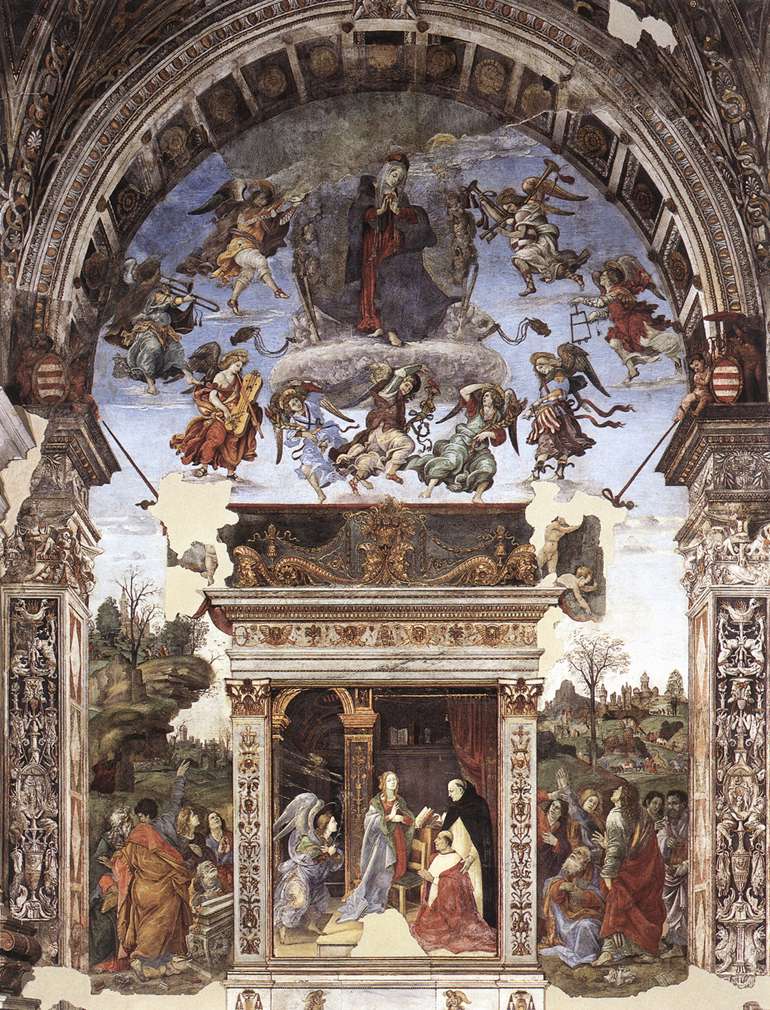
Assumption & Annunciation - Lippi Filippino
Sunday, October 25, 2009
The Glorious Mysteries of the Holy Rosary
The Glorious Mysteries
Scriptural Rosary
The Glorious Mysteries, commonly said on Sundays and Wednesdays, call to mind Christ’s sacrifice for the redemption of the world, and our sharing in the fruits of this sacrifice.

The First Glorious Mystery, The Resurrection of Jesus is a time to contemplate the glorious triumph when on the third day after His death, He arose from the tomb and for forty days appeared to His Blessed Mother and the disciples. Read the following passages from Scripture before praying this decade: Matthew 28:1-7; John 20:20-25 and 27-29.

The Second Glorious Mystery, the Ascension of Our Lord, calls to mind the desire for the virtue of hope as we ask our Lord for the grace to persevere in faith throughout our life with a firm hope and deep longing for heaven. Read the following passages from Scripture before praying this decade: Luke 24:50-53; Matthew 28:18-20; Mark 16:16; Mark 16:20 and Acts 1:10-11.
The Third Glorious Mystery, the Descent of the Holy Spirit reminds us to ask the Holy Spirit to fill us with His gifts, that we may produce the fruits of the Spirit, love, joy, peace, patience kindness, generosity, faithfulness, gentleness and self-control. Read the following passages from Scripture before praying this decade: John 14:26; Acts 1: 5-8; Acts 2: 1-6; and 38-41.

The Fourth Glorious Mystery, the Assumption of the Blessed Virgin Mary into Heaven, reminds us to contemplate and desire a holy death. By the power of God, Mary was assumed into heaven and r
 eunited with her Divine Son, help us to have this gift of a holy death. Read the following passages from Scripture before praying this decade: Genesis 3:15; Song of Songs 2:10-11; Judith 13:18-19; Judith 15:9; Psalm 132-8; Revelation 11:19; and Luke 1:46-48.
 The Fifth Glorious Mystery, the Coronation of the Blessed Virgin Mary as Queen of Heaven is a time to contemplate a deeper love for Our Blessed Mother and desire to always be willing to say yes to God as Mary did throughout her life. Read the following passages from Scripture before praying this decade: Psalm 45:10-15; Song of Songs 6:10; Luke 1:46-49; 2 Timothy 2:11-12; Revelation 12:1, 5 and Revelation 22:17.

Subscribe to:
Posts (Atom)