This post is an honest attempt to look at the COVID-19 vaccine from both sides. To get the vaccine or not, that is the question.
Getting this vaccine, which I am not eligible for, but will be eligible for as the world is flooded with vaccines by May 2021, is a matter of conscience. Each person must make their own decision and not be forced to take this by the state or peer pressure.
I am not an anti-vaccer, nor am I anti-humanity (which has been suggested as I won't just be vaccinated for the "common good"). I am cautious. I am a researcher. I have spend the last 37 years researching different subjects. I look at both sides, the following list is my research. Numbers correspond to sections below.
1. A Matter of Conscience
2. Public Reported Side-Effects and CDC from COVID-19 Vaccine 3. Government Recommendations 4. Dr. Fauci 4A. Shane Crotty PhD. on Dr. Fauci (positive interview) 4B. Dr. Fauci Interviewed on the Carlos Watson Show (positive interview) 4C. Interview with Judy Mikovits, PhD. on Dr. Fauci (opposing viewpoint) 4D. Articles on Dr. Fauci and the Vaccination of Children 4E. So much more on Dr. Fauci 5. The History of mRNA
6. Pfizer & Moderna 7. World Health Organization - Fatality Rate From COVID19
8. Dr. Simone Gold - America Frontline Doctors (PLEASE WATCH VIDEOS) ******
8a. America Frontline Doctors White Paper on COVID 19 9. America Frontline Doctors
10. Dr. Sucharit Bhakdi - The Biggest Experiment Ever Done
11. Vaccine Developers Wary of Errant Antibodies 12. Long-Term Vaccine Effects: Inflammation-induced Disruptions 13. World Health Organization - Infection Rate After Vaccine 14. Will Vaccines Save Lives? 15. COVID-19 Vaccine Side Effects - Concerned Doctors Speak Out 16. Are COVID19 Vaccines Gene Therapy? 17. What is Herd Immunity? 18. We are going to pay a huge price for mass COVID vaccination + Rebuttal 19. Corticosteroids & Ivermectin? 20. Dr. Suneel Dhand - Why I haven't taken the COVID vaccine yet 21. How Long After a COVID Diagnosis Should I Get Vaccinated? And other scenarios 22. 18 Reasons Why I Won't Get the COVID-19 Vaccine 23. How a False Hydroxychloroquine Narrative was Created by Dr. M. Nass and the Allegiance for Human Research Protection 24. Heart Inflammation After COVID Vaccine 25. The Many Ways in Which COVID Vaccines May Harm Your Health
26: Blood Clots - Nurse talks about her dad's death after COVID Injection
27: Information on Children and Vaccine 28: US Spending $1.2 billion on Merck's COVID-19 Treatment Is a 'Waste of Taxpayers' Money' (
29. CDC Finds 'LIkely' Link between Heart Inflammation and Pfizer, Moderna COVID Vaccines 30. The COVID Spike Protein and the Still Uncertain Side Effects of the mRNA Vaccines ***31. Might COVID Injections Reduce Lifespan?
Conclusion: From what I have researched (below) it looks like that for us we will wait until there has been more research done on the current vaccines and the ones coming down the pike. To us it appears the risks of the vaccine outweigh the perceived benefits. I may change my mind in the future as more research comes out. But this decision is a matter of conscience and everyone is still free to make their own decision. I feel I have researched this widely. Will be watching this closely and at the same time doing our best to stay healthy.
This is a live document that I add to whenever I find something of interest. So much information has been brought to the public since I began this research. I have placed the new information below and if you scroll to the end of the updates you will find numbers 1 - 31 which correspond to the index above. If you have limited time just watch the two videos with Dr. McCullough below! You will also notice that some of the videos I posted have been censored and taken down or put to "private." Something is not right here.
America's Frontline Doctors have brought in Ohio-based attorney Tom Renz to sue the Federal Government in U.S. District Court for the Northern District of Alabama. This suit, the first of its kind, is all about advocating for the estimated 45000 deaths from the Covie "vaccine" mighting assisted by the sworn affidavit by an anonymous whistleblower.
Data released today by the Centers for Disease Control and Prevention (CDC) showed that between Dec. 14, 2020 and Sept. 3, 2021, a total of 675,593 adverse events following COVID vaccines were reported to the Vaccine Adverse Event Reporting System (VAERS). The data included a total of 14,506 reports of deaths — an increase of 595 over the previous week.
There were 88,171 reports of serious injuries, including the reports of deaths, during the same time period — up 2,200 compared with the previous week.
Data released today by the Centers for Disease Control and Prevention (CDC) showed that between Dec. 14, 2020 and Aug. 13, 2021, a total of 595,622 total adverse events were reported to VAERS, including 13,068 deaths — an increase of 702 over the previous week.
There were 81,050 reports of serious injuries, including deaths, during the same time period — up 10,945 compared with the previous week.
Data released today show that between Dec. 14, 2020 and July 9, 2021, a total of 463,457 total adverse events were reported to VAERS, including 10,991 deaths — an increase of 1,943 over the previous week. There were 48,385 serious injuries reported during the same time period — up 7,370 compared with the previous week.
Number of deaths reported after COVID Vaccines jumps by more than 2,000 in 1 week, according to VAERS. Data released today by the Centers for Disease Control and Prevention (CDC) included 9,049 reports of deaths, across all age groups, following COVID vaccines — an increase of more than 2,000 compared with the previous week. The data comes directly from reports submitted to the Vaccine Adverse Event Reporting System (VAERS).
Data released today show that between Dec. 14, 2020 and June 25, 2021, a total of 411,931 total adverse events were reported to VAERS, including 6,985 deaths — an increase of 872 deaths over the previous week. There were 34,065 serious injury reports, up 2,825 compared with last week.
In 2018 there were 119 vaccine related deaths reported to VAERS. In 2019 there were 203. This year as of June 4th there have been 5,888 COVID vaccine related deaths (my brother-in-law was one of these), and 652 miscarrages. See the above link for more information.
COVID -19 Vaccine Breakthrough Case Investigation and Reporting by CDC Hospitalized or fatal COVID-10 vaccine breakthrough cases reported to CDC as of June 21, 2021 More than 150 million people in US are fully vaccinated During that time 4,115 patients with COVID-19 vaccine breakthrough infection were hospitalized (3,907) or died (750) .
ADDED NOTE VERY IMPORTANT : Today April 28, 2021 my brother-in-law age 58 died less than 48 hours after taking their second Pfizer vaccine. We are now one of 4000 deaths reported to VAERS between December 2020 to May 2021.
New update from Tucker Carlson May 5, 2021. Very interesting statistics - something to think about.
TUCKER CARLSON: HOW MANY AMERICANS HAVE DIED AFTER TAKING COVID VACCINES?
ADDED NOTE 4/12/21 DRUGS APPROVED TO TREAT COVID-19
FDA Approves First Treatment for COVID-19 ( October 2020) First antiviral drug Veklury (remdesivir) for use in adult and pediatric patients 12 years of age and older and weighing at least 40 kilograms (about 88 pounds) for the treatment of COVID-19 requiring hospitalization.
ADDED NOTE 3/24/21 VERY IMPORTANT! These three brave doctors (McCullough, Urso and Vliet) have worked with Association of American Physicians and Surgeons and put together "A Guide to Home-Based COVID Treatment."!!! Order your FREE pdf copy and have it on hand.
Peter McCullough, MD Testimony In Front of Senate HHS Committee
Richard Urso, MD
Testimony In Front of Senate HHS Committee
Elizabeth Lee Vliet, MD
More from Dr. McCullough (interview with Dr. Breggin early May 2021)
+++
1. A MATTER OF CONSCIENCE
Catholic-Vaccine and Conscience (Fr. Cristino Bouvette) February 10, 2021
+++
2. PUBLIC REPORTED SIDE-EFFECTS AND CDC for COVID-19 VACCINE
Once you are fully vaccinated, you may be able to start doing some things that you had stopped doing because of the pandemic.
(However)
COVID-19 vaccines are effective at protecting you from getting sick. Based on what we know about COVID-19 vaccines, people who have been fully vaccinated can start to do some things that they had stopped doing because of the pandemic.
We’re still learning how vaccines will affect the spread of COVID-19. After you’ve been fully vaccinated against COVID-19, you should keep taking precautions in public places like wearing a mask, staying 6 feet apart from others, and avoiding crowds and poorly ventilated spaces until we know more.
CDC RECOMMENDATIONS FOR PREGNANT WOMEN
Pregnant people are at increased risk for severe illness from COVID-19
Although the overall risk of severe illness is low, pregnant people are at an increased risk for severe illness from COVID-19 when compared to non-pregnant people. Severe illness includes illness that results in intensive care admission, mechanical ventilation, or death. Additionally, pregnant people with COVID-19 might be at increased risk of adverse pregnancy outcomes, such as preterm birth, compared with pregnant women without COVID-19.
(However see below)
Limited data are available about the safety of COVID-19 vaccines for people who are pregnant
Based on how these vaccines work in the body, experts believe they are unlikely to pose a specific risk for people who are pregnant. However, there are currently limited data on the safety of COVID-19 vaccines in pregnant people
Clinical trials that look at the safety and how well the COVID-19 vaccines work in pregnant people are underway or planned.
+++
4. DR. FAUCI
Eugenio Derbez Interviews Dr. Fauci (March 13, 2021)
"Most adverse effects occurs between 15 and 45 days." Dr. Fauci
Dr. Fauci was appointed Director of NIAID in 1984. He oversees an extensive research portfolio of basic and applied research to prevent, diagnose, and treat established infectious diseases such as HIV/AIDS, respiratory infections, diarrheal diseases, tuberculosis and malaria as well as emerging diseases such as Ebola and Zika. NIAID also supports research on transplantation and immune-related illnesses, including autoimmune disorders, asthma and allergies. The NIAID budget for fiscal year 2021 is an estimated $6.1 billion. The video below with Professor Shane Crotty, PhD was recommended by Dr. Fauci.
COVID-19 Vaccine Deep Dive: Safety, Immunity, RNA Production
4B. DR. FAUCI INTERVIEWED ON THE CARLOS WATSON SHOW
Dr. Fauci on the Carlos Watson Show January 8, 2021
4C. JUDY MIKOVITS, Ph.D. INTERVIEW WITH CHILDREN"S HEALTH DEFENSE
Dr. Mikovits had two early run-ins with Dr. Fauci. The first was over research on retrovirus and AIDS. This interview is worth a watch if interested in both sides of the story. Accesses interview here.
If you look at the existing trials — those that have already gotten an EUA, and those that we anticipate and hope will get and EUA — when will we be able to say we can vaccinate children — children in the high school range and children in the elementary school range?
You know from Pfizer that they started off with the trial of 44,000 individuals, down to 16-year-olds and then progressed it down to 12-year-olds. So what they’re going to be doing in April — starting in April, they are going to be studying 12-year-olds down to five- to six-year-old. That will take likely one year to get the information on that — likely not until the first quarter.
However, we anticipate data on high-school-age individuals, namely individuals 12 years old to 17 years old, by the beginning of the fall. Maybe not exactly coinciding with the first day of school, but sometime in the fall, we will have that. Moderna, as you know, started off with already 18-year-old. They are now currently enrolling 12- to 17-year-olds.
Despite the fact that COVID-19 has had little impact, physically, to children, health officials are setting the stage for widespread vaccination of this population
Considering that children are at extremely low risk from COVID-19, vaccination offers them far more risk than benefit, and parents understandably may be reluctant to volunteer their children to receive this experimental and unlicensed gene therapy
Public health officials have made it clear, however, that vaccination of children is expected for the sake of herd immunity
Studies suggest that children are not driving the COVID-19 pandemic and, in fact, appear less likely to transmit COVID-19 than adults
Moderna is also enrolling 3,000 children between the ages of 12 and 17 to test their COVID-19 vaccine, using the same dose given to adults,5 while Pfizer also expanded its clinical trials to include children as young as 12.6 Johnson & Johnson even announced on February 28, 2021, that it plans to test its COVID-19 vaccine on infants, including newborn babies, pregnant women and people with compromised immune systems.
According to Children’s Health Defense (CHD), professor Dolores J. Cahill, Ph.D., a molecular biologist and immunologist, “expects to see successive waves of adverse reactions to the experimental messenger RNA (mRNA) injections ranging from anaphylaxis and other allergic responses to autoimmunity, sepsis and organ failure.”9
Considering that children are at extremely low risk from COVID-19, vaccination offers them far more risk than benefit, and parents may be understandably reluctant to volunteer their children to receive this experimental and unlicensed gene therapy. Public health officials have made it clear, however, that vaccination of children is expected. CHD reported:10
“Already last April — when next to nothing was known about COVID’s epidemiology, and candidate vaccines had barely begun to be studied — Bill Gates set the stage for the pediatric push, declaring that the end goal is to make COVID-19 vaccines 'part of the routine newborn immunization schedule.'”
Dr. Anthony Fauci, director of the National Institute of Allergy and Infectious Diseases (NIAID), also stated that 85% to 90% of the U.S. population, including children, will need to receive a COVID-19 vaccine before life can return to normal, and he suggested that first graders may be authorized to be vaccinated by September 2021.
Children as young as first graders may be able to get the coronavirus vaccine by the time school starts in September, presuming trials are successful in those age groups, Dr. Anthony Fauci, director of the National Institute of Allergy and Infectious Diseases, said in an interview with ProPublica.
“We’re in the process of starting clinical trials in what we call age de-escalation, where you do a clinical trial with people 16 to 12, then 12 to 9, then 9 to 6,” Fauci said. When asked what was the youngest age group that might be authorized for the vaccine by September, he said, “I would think by the time we get to school opening, we likely will be able to get people who come into the first grade.”
4E. MORE DR. FAUCI ON J & J
Which Does Dr Fauci Prefer: The Pfizer, Moderna, or Johnson & Johnson? March 13, 2021 with Stephen Colbert
March 22, 2021 Dr. Fauci on the White House Website Chief Medical Advisor to President Biden on the Johnson and Johnson Vaccine
Dr. Fauci April 13, 2021 on the Johnson and Johnson Vaccine "Pause" White House Press Conference
Pfizer, a 171 year old Fortune 500 powerhouse, has made a billion-dollar bet on that dream.
For decades, scientists have dreamed about the seemingly endless possibilities of custom-made messenger RNA or mRNA. But turning scientific promise into medical reality has been more difficult than many assumed. Although relatively easy and quick to produce compared to traditional vaccine-making, no mRNA vaccine or drug has ever won approval.
That discovery, described in a series of scientific papers starting in 2005, largely flew under the radar at first, said Weissman, but it offered absolution to the mRNA researchers who had kept the faith during the technology’s lean years. And it was the starter pistol for the vaccine sprint to come.
And even though the studies by Karikó and Weissman went unnoticed by some, they caught the attention of two key scientists — one in the United States, another abroad — who would later help found Moderna and Pfizer’s future partner, BioNTech.
Within several months, Rossi, Langer, Afeyan, and another physician-researcher at Harvard formed the firm Moderna — a new word combining modified and RNA.
Springer was the first investor to pledge money, Rossi said. In a 2012 Moderna news release, Afeyan said the firm’s “promise rivals that of the earliest biotechnology companies over 30 years ago — adding an entirely new drug category to the pharmaceutical arsenal.”
But although Moderna has made each of the founders hundreds of millions of dollars — even before the company had produced a single product — Rossi’s account is marked by bitterness. In interviews with the Globe in October, he accused Langer and Afeyan of propagating a condescending myth that he didn’t understand his discovery’s full potential until they pointed it out to him.
Despite the squabbling that followed the birth of Moderna, other scientists also saw messenger RNA as potentially revolutionary.
In Mainz, Germany, situated on the left bank of the Rhine, another new company was being formed by a married team of researchers who would also see the vast potential for the technology, though vaccines for infectious diseases weren’t on top of their list then.
Both see themselves as scientists first and foremost. But they are also formidable entrepreneurs. After they co-founded another biotech, the couple persuaded twin brothers who had invested in that firm, Thomas and Andreas Strungmann, to spin out a new company that would develop cancer vaccines that relied on mRNA.
That became BioNTech, another blended name, derived from Biopharmaceutical New Technologies. Its U.S. headquarters is in Cambridge. Sahin is the CEO, Türeci the chief medical officer.
Moderna made a splash in 2012 with the announcement that it had raised $40 million from venture capitalists despite being years away from testing its science in humans. Four months later, the British pharmaceutical giant AstraZeneca agreed to pay Moderna a staggering $240 million for the rights to dozens of mRNA drugs that did not yet exist.
The biotech had no scientific publications to its name and hadn’t shared a shred of data publicly. Yet it somehow convinced investors and multinational drug makers that its scientific findings and expertise were destined to change the world. Under Bancel’s leadership, Moderna would raise more than $1 billion in investments and partnership funds over the next five years.
Moderna’s promise — and the more than $2 billion it raised before going public in 2018 — hinged on creating a fleet of mRNA medicines that could be safely dosed over and over. But behind the scenes the company’s scientists were running into a familiar problem. In animal studies, the ideal dose of their leading mRNA therapy was triggering dangerous immune reactions — the kind for which Karikó had improvised a major workaround under some conditions — but a lower dose had proved too weak to show any benefits.
Moderna had to pivot. If repeated doses of mRNA were too toxic to test in human beings, the company would have to rely on something that takes only one or two injections to show an effect. Gradually, biotech’s self-proclaimed disruptor became a vaccines company, putting its experimental drugs on the back burner and talking up the potential of a field long considered a loss-leader by the drug industry.
When BioNTech went public last October, it raised $150 million, and closed with a market value of $3.4 billion — less than half of Moderna’s when it went public in 2018.
Despite his role as CEO, Sahin has largely maintained the air of an academic. He still uses his university email address and rides a 20-year-old mountain bicycle from his home to the office because he doesn’t have a driver’s license.
Then, late last year, the world changed.
After isolating the virus from patients, Chinese scientists on Jan. 10 posted online its genetic sequence. Because companies that work with messenger RNA don’t need the virus itself to create a vaccine, just a computer that tells scientists what chemicals to put together and in what order, researchers at Moderna, BioNTech, and other companies got to work.
A pandemic loomed. The companies’ focus on vaccines could not have been more fortuitous.
Moderna and BioNTech each designed a tiny snip of genetic code that could be deployed into cells to stimulate a coronavirus immune response. The two vaccines differ in their chemical structures, how the substances are made, and how they deliver mRNA into cells. Both vaccines require two shots a few weeks apart.
Moderna was the first drug maker to deliver a potential vaccine for clinical trials. Soon, its vaccine became the first to undergo testing on humans, in a small early-stage trial. And on July 28, it became the first to start getting tested in a late-stage trial in a scene that reflected the firm’s receptiveness to press coverage.
The first volunteer to get a shot in Moderna’s late-stage trial was a television anchor at the CNN affiliate in Savannah, Ga., a move that raised eyebrows at rival vaccine makers.
Along with those achievements, Moderna has repeatedly stirred controversy.
On May 18, Moderna issued a press release trumpeting “positive interim clinical data.” The firm said its vaccine had generated neutralizing antibodies in the first eight volunteers in the early-phase study, a tiny sample.
But Moderna didn’t provide any backup data, making it hard to assess how encouraging the results were. Nonetheless, Moderna’s share price rose 20% that day.
In addition, some critics have said the government has given Moderna a sweetheart deal by bankrolling the costs for developing the vaccine and pledging to buy at least 100 million doses, all for $2.48 billion.
That works out to roughly $25 a dose, which Moderna acknowledges includes a profit.
Pfizer, through its partnership with BioNTech, isn’t taking any money upfront from the government. Rather, the federal government will pay the partners $1.95 billion for at least 100 million doses if the vaccine gets approved.
Some experts worry about injecting the first vaccine of this kind into hundreds of million of people so quickly.
“You have all these odd clinical and pathological changes caused by this novel bat coronavirus, and you’re about to meet it with all of these vaccines with which you have no experience,” said Paul Offit, an infectious disease expert at Children’s Hospital of Philadelphia and an authority on vaccines.
The Pfizer-BioNTech COVID-19 vaccine has not been approved or licensed by the U.S. Food and Drug Administration, but has been authorized for emergency use by FDA under an Emergency Use Authorization to prevent Coronavirus Disease 2019 for use in individuals 16 years of age and older. The emergency use of this product is only authorized for the duration of the declaration that circumstances exists justifying the authorization of emergency use of the medical product Section 564(b)(1) of the FD&C Act unless the declaration is terminated or authorization revoked sooner.
https://www.cvdvaccine.com/
The approval status of the Pfizer‑BioNTech COVID‑19 Vaccine varies worldwide. In countries where the vaccine has not been approved by the relevant regulatory authority, it is an investigational drug, and its safety and efficacy have not been established.
The Moderna COVID-19 Vaccine is an unapproved vaccine that has been authorized for emergency use by the FDA for active for emergency use by the FDA for active immunization to prevent COVID-19 in individuals 18 years of age and older. The vaccine was developed by Moderna, a biotechnology company that has focused on mRNA technology since 2010, and is currently being studied in a large Phase 3 trial.
+++
7. WORLD HEALTH ORGANIZATION - FATALITY RATE FROM COVID
Publication: Bulletin of the World Health Organization; Type: Research Article ID: BLT.20.265892 Page 1 of 37 John P A Ioannidis Infection Fatality Rate of COVID-19 (14 October 2020)
Abstract Objective To estimate the infection fatality rate of coronavirus disease 2019 (COVID-19) from seroprevalence data.
Results I included 61 studies (74 estimates) and eight preliminary national estimates. Seroprevalence estimates ranged from 0.02% to 53.40%. Infection fatality rates ranged from 0.00% to 1.63%, corrected values from 0.00% to 1.54%. Across 51 locations, the median COVID-19 infection fatality rate was 0.27% (corrected 0.23%): the rate was 0.09% in locations with COVID-19 population mortality rates less than the global average (< 118 deaths/million), 0.20% in locations with 118–500 COVID-19 deaths/million people and 0.57% in locations with > 500 COVID-19 deaths/million people. In people < 70 years, infection fatality rates ranged from 0.00% to 0.31% with crude and corrected medians of 0.05%.
Conclusion The infection fatality rate of COVID-19 can vary substantially across different locations and this may reflect differences in population age structure and case mix of infected and deceased patients and other factors. The inferred infection fatality rates tended to be much lower than estimates made earlier in the pandemic.
+++++++++++++++++++++++++++++ AND NOW A LOOK WHAT SOME OTHER DOCTORS SAY +++++++++++++++++++++++++++++
8. DR. SIMONE GOLD - AMERICA FRONTLINE DOCTORS (linkedin)
10. DR. SUCHARIT BHAKDI The Biggest Experiment Ever Done
Interview with virologist Dr. Sucharit Bhakdi (bio) on why the rushed COVID-19 vaccine trials represent one of the world's largest medical experiments. Dr. Bhakdi is an award-winning virologist with 300 published articles on immunology, bacteriology, virology and parasitology. (Video on link)
Unfortunately the entire article is a paid version here is the summary of the News section of Nature Medicine, June 5, 2020, and written by Ken Garber:
This article explores a phenomenon called Antibody-Dependent Enhancement (ADE). This occurs when binding of a virus to non-neutralizing antibodies enhances its entry into host cells, and sometimes also its replication.
The clinical outcome in individuals where an immune response results in the production of non-neutralizing antibodies, either through natural infection or through vaccination, usually results in a more serious outcome after infection compared to those who are immunologically naive.
Prior observations of ADE in some early SARS and MERS vaccine candidates recommends consideration of vaccine design and extensive animal testing as we move forward with clinical trials for vaccines directed against SARS-CoV-2.
"…There are mounting theoretical concerns that vaccines generating antibodies against SARS-CoV-2 may bind to the virus without neutralizing it. Should this happen, the non-neutralizing antibodies could enhance viral entry into cells and viral replication and end up worsening infection instead of offering protection, through the poorly understood phenomenon of ADE. ADE “is a genuine concern,” says virologist Kevin Gilligan, a senior consultant with Biologics Consulting, who advises thorough safety studies. “Because if the gun is jumped, and a vaccine is widely distributed that is disease enhancing, that would be worse than actually not doing any vaccination at all.”
Judy Mikovits: So taking a synthetic messenger RNA, making it thermo-stable, that is making it not break down. We have lots of RNases and DNases. Those are enzymes that degrade free RNA and DNA because again, those are danger signals to your immune system, and theyliterally turn on the flame or drive inflammatory diseases.
Judy Mikovits: And in some of the small animal models with others of these, they follow it with the luciferase gene, which lights it up, and you can track it. And you can see it stay in the spleen, and you can see that it goes to the brain. So you've hit to the heart of your white blood cells of your ability to make immune responses. So I can see this and then those of course with chemokine, cytokine signaling the inflammatory cytokine storm you're going to get when you inject this synthetic. It can traffic everywhere in the body. For me, I can't even sleep just how evil this is. This is just so deadly. I can't scream it loud enough from the rooftops.
Dr. Mercola: I know they're not vaccines. I get that, but I wanted to say but going along the traditional vaccine route, coronavirus – this is not the first coronavirus. It's been around for a long time, and there's been more than 10 years of efforts to develop coronavirus vaccines, and all of them failed. It was worse than failed. They produced this paradoxical immune reaction, which essentially immunized animals that they didn't. Remember, animal studies were not done. They were eliminated. They bypassed that. And when they did the animals studies for the previous coronavirus vaccines, they developed immunity. But the next time they were exposed to the coronavirus, most of the animals died because of this paradoxical immune reaction.
Dr. Mercola:
I was going to ask you about that. I thought it was more highly expressed in the placenta. So
does that also contribute to the projected or observed effects on fertility?
Judy Mikovits:
It will. Yeah, because that allows implantation. So if you can't implant because what you're
going to do when you're injected with a synthetic one and we know this from being injected with
the animal ones, this was the monkeys, the mouse retroviruses, the families, Moloney murine
leukemia viruses. Those were all those things we found in people with ME/CFS, with cancers,
with CLL (chronic lymphocytic leukemia), with multiple myeloma. So when you express these
aberrantly in the body and in the wrong place, you literally destroy autoimmune reaction against
– of course, that's not cell. That's non-cell. So you attack your own syncytin, and the microglias I
mentioned, the macrophages, you'll get inflammation-induced disruption of those cytokine
storms of reactive oxygen species.
Judy Mikovits:
That's exactly a model that was presented that was in our original all the way back in 2007.
Dennis Taub, Ph.D., who is the author of the paper I showed in that slide show from 2004 in
nature when we realized that when you express aberrantly this viral envelope that's in
everybody's genome, encoded in the genome in the brain, in the wrong place, that it's strongly
associated with the development of multiple sclerosis. So we knew this. That was the proposal
that we wrote. It was all the way back in 2007, the first one that was awarded between Dennis
Taub, Frank Ruscetti at the Institute on Aging and at the National Cancer Institute.
Dr. Mercola:
Now one of the other side effects of this gene therapy intervention is our allergic reactions, even
up to anaphylactic reactions. It's interesting that I think one of the very first nurses to get this
who was on a national broadcast, she literally passed out from a syncopal episode. So many more
reports from that. What do you believe is the trigger for this allergic reaction? Is it the PEG, the
polyethylene glycol?
Judy Mikovits:
Yeah, it's almost certainly the PEG. Almost 70% of America will have such an allergic reaction,
and it can be severe to the point of death from the polyethylene glycol. We know this. I mean,
my colleagues in the field are looking at this saying, "What do you mean you're putting that in
there?"
Dr. Mercola:
I know. It's just like shocking.
Judy Mikovits:
And this is what we saw. This is again another virus-like particle or lipid nanoparticle is used in
the Gardasil vaccine, and we see the same thing in Gardasil injury. So that young woman almost
certainly got the Gardasil vaccine. So she's got a pathogenic priming event, and now young
women – these nurses we saw that severe case of the CNA, the certified nursing assistant who
just had the Chorea-like, couldn't stop the movements of her body anywhere as Dr.
Neuenschwander discussed the neurology behind it on The HighWire a few weeks ago with Del
Bigtree. So we're seeing all of these things, and I believe the PEG is causing a lot of it along with
the expression of other things. But these instantaneous effects are almost certainly the PEG and
that lipid nanoparticle, the toxic particle that's being injected.
Dr. Mercola:
That makes sense. So what is your projection for some of the other symptoms that will develop
as a result of administration of this therapy, an experimental therapy? It's never been proven to
be effective, and it's never, ever been show or even suggested that it prevents infection with
SARS-CoV-2.So what is your projection for the onset of some of the new
symptoms that will develop over time? Because we know that with traditional vaccines, I mean,
you have the acute reactions but then you have the longer-term ones, which will be weeks,
months down the road, maybe even years. So what is your projection that we should anticipate?
So this neuro inflammation symptoms get worse as it builds with time?
Judy Mikovits:
I think we're going to see severe headaches, migraines. I think tics. The tics and the shaking, the
Parkinsonian shakes. I see the microvascular disorders because that's what the angiogenesis, the
problems in microvascular disorders which the expression of the envelope alone, syncytin can
cause, can drive prostate cancers. I think we're going to see tumor development, a lot of it, and
expansion of those with tumors. I can't even fathom as I said sitting down here that a doctor, an
oncologist, is encouraging cancer patients to get this. Just like they sat cancer patients in a mask.
Have they not heard of hypoxia-inducible factor 1-alpha, which is like throwing a blowtorch on a
cancer.
Judy Mikovits:
So again, you're going to see the symptoms ontology, the pain, severe pain syndromes like
fibromyalgia, like rheumatoid arthritis. I think we're going to see that severe, severe pain. We're
going to see the kinds of things we've seen in vaccine injury with Gardasil. We're going to see
bladder problems. These kids with Gardasil injury are in diapers, and I don't mean kids. I mean
21-year olds and young adults. We're going to see kidney disease. We're going to see kidney
cancer, bladder cancer. We're going to see, again, just the inflammatory diseases.
Dr. Mercola:
You don't think it will progress to like with symptoms like those on the autism spectrum
disorder? So it won't go to that level?
Judy Mikovits:
Oh, I think it will, and you see, but that's what we see in that particular slide I was discussing
earlier. That's what you see in the psychosis. No, it's psychosis. So in adults, it's going to be the
rage, the anger, the psychosis, the inability just to sleep, the sleep disorders. I think you're going
to see narcolepsy as we see in Gardasil. I think we're going to see neurodegenerative diseases. I
mean, we have kids, lots and lots of kids with Lou Gehrig's disease. I think you're going to see it
in the athletes. I think we're already seeing it in the athletes, the injuries on the football field
because that's trauma. Again, cancers. Those are acquired immune dysfunction deficiencies. And
we're seeing all of that now, and those will be the first to die.
+++
13. WORLD HEALTH ORGANIZATION - INFECTION RATE AFTER VACCINE
TJ Thank you very much, Professor Koopmans. Let’s try to take a couple more questions, although we are already nearing the hour marker. Let’s go to Sydney Morning Herald, and we have Latika Bourke with us. Latika?
LB Thank you so much. Thank you for being with us today, and for taking these questions. I’m particularly interested in your views on how you think the vaccine will work in the context of elimination, because countries in my home patch, of course, in the Asia-Pacific, have done very well and kept community transmission rates very low, to the point where some have eliminated.
But what does that mean for in the long-term, where people are vaccinated overseas? Does that ensure that they are not a risk, traveling to countries that have almost zero community transmission? Or do you think that people who have been vaccinated will still need to quarantine if they’re going to countries that have low transmission?
TJ That’s an excellent question, Latika. Thank you very much for that. I’ll ask Dr Swaminathan if she can answer this question. Dr Swaminathan.
SS Thank you. And others might want to add, but I think that’s a really important question. And I think, Latika, what we’re learning now, and we continue to wait for more results from the vaccine trials, is to really understand if these vaccines, apart from preventing symptomatic disease and severe disease and deaths, whether they’re also going to reduce infections, or prevent people from getting infected with the virus, prevent them from passing it on or transmitting it to other people.
01:00:03
At the moment, I don’t believe we have the evidence on any of the vaccines to be confident that it’s going to prevent people from actually getting the infection and therefore being able to pass it on. So, I think until we know more, we need to assume that people who have been vaccinated also need to take the same precautions until there is a certain level of herd immunity, of course, that’s been built in the population. So, again, this is a dynamic and evolving field, and I think our understanding and our recommendations will change as we get more follow-up data from these trials. Thanks. Others might want to add.
TJ Thank you very much, Dr Swaminathan. Dr Ryan?
MR No, I agree with Soumya’s points there. And I think it’s important that we also reflect on that the main objective of the vaccine and the first rollout will be to prevent severe illness, to prevent deaths, to protect frontline health workers, and to protect the most vulnerable people in our society.
And we would hope that that protection is offered to health workers and vulnerable people all around the world. So the first and primary objective is to decrease the impact that this disease is having on people’s lives. And therefore, that will be a major step forward in bringing the world back to some kind of normal.
01:01:30
The second phase is then looking at how will this vaccine affect transmission. And Soumya is right. We just don’t know enough yet about length of protection and other things to be absolutely able to predict that. But I think we should be able to get good control of the virus.
A decision then to move towards elimination or eradication of the virus requires a much higher degree of efficiency and effectiveness in a vaccination programme and all of the other control measures. And we still don’t know, based on virus evolution, based on so many other things.
The likely scenario is the virus will become, as David Heymann said previously, another endemic virus, a virus that will remain somewhat of a threat, but a very low-level threat in the context of an effective global vaccination programme. We will have to… It remains to be seen how well the vaccines are taken up, how close we get to a coverage level that might allow us the opportunity to go for elimination or eradication.
We’ve seen this with polio. We’ve seen this with measles. So, Bruce and others online, Ana Maria and others who have a lot of experience with measles and polio may be able to speak about this. The existence of a vaccine, even at high efficacy, is no guarantee of eliminating or eradicating an infectious disease. That is a very high bar for us to be able to get over.
First and foremost, we have to focus on saving lives, getting good control on this epidemic so our societies can return to normal, and then we will deal with the moon-shot of potentially being able to eliminate or eradicate this virus. But at this point, based on the tools we have and the knowledge we have, that’s impossible to say at this moment.
As phase III trials of covid-19 vaccines reach their target enrolments, officials have been trying to project calm. The US coronavirus czar Anthony Fauci and the Food and Drug Administration leadership have offered public assurances that established procedures will be followed. Only a “safe and effective” vaccine will be approved, they say, and nine vaccine manufacturers issued a rare joint statement pledging not to prematurely seek regulatory review.
But what will it mean exactly when a vaccine is declared “effective”? To the public this seems fairly obvious. “The primary goal of a covid-19 vaccine is to keep people from getting very sick and dying,” a National Public Radio broadcast said bluntly.
Peter Hotez, dean of the National School of Tropical Medicine at Baylor College of Medicine in Houston, said, “Ideally, you want an antiviral vaccine to do two things . . . first, reduce the likelihood you will get severely ill and go to the hospital, and two, prevent infection and therefore interrupt disease transmission.”
Yet the current phase III trials are not actually set up to prove either. None of the trials currently under way are designed to detect a reduction in any serious outcome such as hospital admissions, use of intensive care, or deaths. Nor are the vaccines being studied to determine whether they can interrupt transmission of the virus.
+++
15. COVID-19 VACCINE SIDE EFFECTS CONCERNED DOCTORS SPEAK OUT See Full Article Here This is an excerpt from an analysis done March 23, 2021
If early statistics are any indication, we are facing the greatest public health calamity in modern history. No, I’m not talking about a third, fourth or fifth wave of COVID-19. I’m talking about the current vaccination campaign. I have no doubt that deaths caused by COVID-19 vaccines will end up far exceeding the number of actual COVID-19 deaths.
The greatest tragedy here is that while COVID-19 kills already unhealthy elderly individuals who are just years from their natural death, the vaccines are killing the young and healthy who typically have many more decades to live. From my perspective, there’s simply no justification for this. There’s no “greater good” argument that can ever make this type of tradeoff OK.
Equally unjustifiable is the fact that death within months of a positive SARS-CoV-2 test was automatically pegged as a COVID-19 death, whereas death within days or even hours of the vaccine is shrugged off as coincidental, no matter how many times it happens. It is reprehensibly inexcusable the way these deaths are being attributed.
Now, these experimental gene therapy “vaccines” are being tested on young children and even babies as young as 6 months old, the ramifications of which are wholly unknown.
According to Forbes1 and The New York Times,2 Moderna has officially started testing its vaccine on children between the ages of 6 months and 11 years. A total of 6,750 children will be included in the trial. Testing on 12- to 17-year-olds began in December 2020, the data from which are still unpublished. Considering what’s happening in the adult population, testing on young children and babies seems extremely premature and risky beyond belief.
Comparing COVID-19 and Vaccine Death Rates
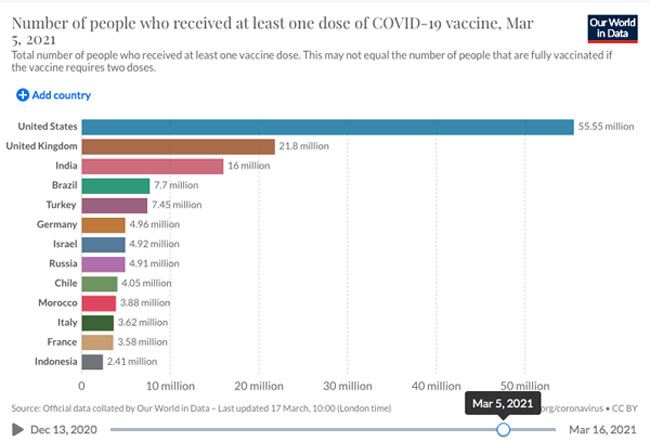
Another difficulty is matching different data sets together. For example, to put these numbers into greater context, you’d want to know how many people have been vaccinated as of that same date, March 5, 2021.
This too can be tricky to determine, as vaccination statistics will often use breakdowns such as the number of vaccinated people per 100, or vaccine doses administered, which doesn’t tell you how many people were vaccinated, seeing how some vaccines require a single dose while others require two.
Accepting those limitations, we can at least get an approximate idea. Using Our World in Data’s statistics,7 as of March 5, 2021, 55.55 million Americans had received at least one dose. (Another graph shows that as of March 5, 28.7 million Americans were considered fully vaccinated, having received all prescribed doses. However, since side effects can occur after the first dose, I will use that statistic.)
Dividing reported deaths, 1,551, by the number of people having received at least one dose, 55,550,000, we end up with a reported lethality rate of 0.0028%. If only 10% of adverse events are reported to VAERS, we’re looking at approximately 15,510 deaths and a lethality rate of 0.028%.
If only 1% are reported, there may be around 155,100 deaths, and vaccines may be killing 0.28% of all who get them. Again, while any and all deaths following COVID-19 vaccination are supposed to be reported, it’s still unclear whether mandatory reporting is actually taking place.
While 0.0028% or even 0.28% might not seem like a shockingly high percentage of deaths, it’s hard to justify even a single death of a young and healthy individual. For comparison, the overall noninstitutionalized infection fatality ratio from COVID-19, for all age groups, is 0.26%. Those under 40 have only a 0.01% risk of dying from COVID-19 if infected.8
As of right now, the vaccine may not match or exceed the lethality of COVID-19 itself, but we’re only three months into the vaccination campaign. According to NPR,9 21.7% of the U.S. population had received at least one vaccine dose as of March 16, 2021.
There are compelling reasons to suspect these vaccines may contribute to death further down the line, perhaps months or a few years into the future. Those ending up with permanent disability as a result of these vaccines will be at increased risk of early death, for example, and there’s no telling how these vaccines might impact the longevity of children.
If premature death occurs a year or more down the line, it’s unlikely that anyone will suspect it being connected to the vaccine. Right now, even deaths that occur within 24 hours in people who were young and in good health are chalked up to coincidence, which is truly remarkable.
Comparing COVID-19 Vaccines With Flu Vaccines
Another way to judge the lethality of COVID-19 vaccines is to compare it to seasonal flu vaccines which, by the way, used to account for a majority of vaccine injuries. As reported by The Vaccine Reaction:10
“The death rate following COVID mRNA vaccination is much higher than that following influenza vaccination. The CDC’s data allows only a ballpark estimation of the rate of deaths following flu vaccination. In the 2019-2020 influenza season the CDC reports that 51.8 percent of the U.S. population received a vaccine, which is approximately 170 million people.
VAERS reports that in the calendar year 2019 (not the 2019-2020 influenza season) there were 45 deaths following vaccination. To provide context, in 2018 VAERS reports 46 deaths, and in 2017 it reports 20 deaths.
The 45 deaths in 2019 are occurring at a rate of 0.0000265% when calculated using the number of vaccines given in the 2019–2020 influenza season. As of Feb. 26, 47,184,199 COVID vaccinations had been given with 1,136 deaths reported following vaccination, which is approximately a rate of .0024%.”
Are These Deaths Pure Coincidence?
As of March 5, 2021, the youngest recorded death shortly following COVID-19 vaccination was 23.11 Among the more recent reports is that of a healthy 39-year-old mother who died of multiple organ failure just four days after receiving her second dose of the Moderna vaccine.12
The average age of death post-vaccination is 75 and older,13 which is near-identical to the age of death for COVID-19 itself. However, whereas COVID-19 primarily kills elderly in nursing homes who have multiple comorbidities, the vaccines are cutting lives short among elderly who appear to be in relatively good health.
Examples include baseball legend Hank Aaron, who died in his sleep 17 days after receiving the vaccine. He was 86. His death was reported as completely natural and unrelated to the vaccine.14
Another is that of boxing champ Marvin Hagler who, according to his friend Thomas Hearns, was admitted to the ICU due to side effects from his COVID-19 vaccination. (Hearns had posted on his Instagram and Twitter accounts that Hagler was in the hospital ICU “fighting the after effects of the vaccine” and that he wanted fans to pray for his recovery.15
His posts have since been removed, but a screenshot of a retweet16 by Tariq Nasheed is still available.) Hagler died shortly thereafter. He was 66.
I suspect that once more celebrities start dying from the vaccines, more people might start to rethink their decision to get vaccinated. Mainstream media and industry-allied fact checkers are working overtime, though, to “debunk” any suggestion of a link between deaths and the vaccines.
Side Effects Range From Mild to Serious
Aside from sudden death,17,18,19,20,21,22 which is most serious of all, a range of other side effects are being reported, many of which will have a significant impact on quality of life. Examples of side effects reported after vaccination with Pfizer’s, Moderna’s and AstraZeneca’s vaccines from around the world include:
Persistent malaise23,24
Bell’s Palsy25,26,27
Extreme exhaustion28
Swollen, painful lymph nodes
Severe allergic, including anaphylactic reactions29,30,31
Thrombocytopenia (a rare, often lethal blood disorder)32,33
Miscarriages and premature birth.36,37,38 As of March 5, 2021, 85 cases of miscarriage or premature birth had been reported39
Chronic seizures and convulsions40,41
Severe headache/migraine that does not respond to medication
Paralysis42
Sleep disturbances
Psychological effects such as mood changes, anxiety, depression, brain fog, confusion, dissociation and temporary inability to form words
Cardiac problems, including myocardial and tachycardia disorders43
Blindness, impaired vision and eye disorders44,45
Stroke46,47
As reported by The Defender, March 5, 2021, while vaccine injury reports are growing in number, consistent trends have emerged, including the following:48
Overall, 31% of deaths have occurred within 48 hours of vaccination
People who report getting sick within 48 hours of vaccination account for 47% of deaths
About 20% of deaths are cardiac-related
A majority of these side effects are from the Moderna and Pfizer vaccines, which use mRNA technology. The AstraZeneca vaccine uses a chimpanzee adenovirus vector genetically engineered to express the SARS-CoV-2 spike protein instead. However, while many hoped this vaccine would be safer than mRNA versions, this doesn’t seem to be the case.
As of March 16, 2021, more than 20 European countries had suspended the use of AstraZeneca’s vaccine, either in full or in part, following reports of deadly blood clots.49,50 According to a March 2, 2021, report51 by The Defender, U.K. data show the AstraZeneca vaccine actually has 77% more adverse events and 25% more deaths than the Pfizer vaccine.
Like AstraZeneca’s vaccine, Johnson & Johnson’s vaccine also uses an adenovirus vector to carry the gene for SARS-CoV-2 spike protein into your cells, thereby triggering your cells to produce this protein.52 Business Insider has created a comparison chart53 of the four vaccines currently available in the U.S. and Europe — Moderna, Pfizer, AstraZeneca and Johnson & Johnson.
Concerned Doctors Speak Out
Sadly, the vaccine debate is nothing if not one-sided. Medical professionals expressing concern are roundly ignored, despite their growing number. Among them is cardiac surgeon and patient advocate Dr. Hooman Noorchashm, who recently sent a public letter54 to the U.S. Food and Drug Administration commissioner detailing the risks of vaccinating individuals who have previously been infected with SARS-CoV-2, or who have an active SARS-CoV-2 infection.
He’s urging the FDA to require prescreening for SARS-CoV-2 viral proteins to reduce the risk of injuries and deaths following vaccination. He warns the vaccine may trigger an adverse immune response in those who have already been infected with the virus.
Immunologist Dr. Bart Classen has also warned there is troubling evidence suggesting some mRNA shots may cause prion diseases such as Alzheimer’s and ALS,55 and Dr. J. Patrick Whelan, a pediatric rheumatologist specializing in multisystem inflammatory syndrome, has expressed concern about mRNA vaccines’ ability to cause “microvascular injury to the brain, heart, liver and kidneys in ways that were not assessed in safety trials.”56
mRNA “vaccines” created by Moderna and Pfizer are gene therapies. They fulfill all the definitions of gene therapy and none of the definitions for a vaccine. This matters, as you cannot mandate a gene therapy against COVID-19 any more than you can force entire populations to undergo gene therapy for a cancer they do not have and may never be at risk for
mRNA contain genetic instructions for making various proteins. mRNA “vaccines” deliver a synthetic version of mRNA into your cells that carry the instruction to produce the SARS-CoV-2 spike protein, the antigen, that then activates your immune system to produce antibodies
The only one benefiting from an mRNA “vaccine” is the vaccinated individual, since all they are designed to do is lessen clinical symptoms associated with the S-1 spike protein. Since you’re the only one who will reap a benefit, it makes no sense to demand you accept the risks of the therapy “for the greater good” of your community
Since mRNA “vaccines” do not meet the medical and/or legal definition of a vaccine, marketing them as such is a deceptive practice that violates the law that governs advertising of medical practices
SARS-CoV-2 has not even been proven to be the cause of COVID-19. So, a gene therapy that instructs your body to produce a SARS-CoV-2 antigen — the viral spike protein — cannot be said to be preventive against COVID-19, as the two have not been shown to be causally linked (Link to entire article above)
With the rising number of cases of COVID-19 around the world, health officials continue to work to find the best way to protect the public from the disease. You may have heard health officials mention herd immunity as a possible way to contain the spread of COVID-19.
Herd immunity, or community immunity, is when a large part of the population of an area is immune to a specific disease. If enough people are resistant to the cause of a disease, such as a virus or bacteria, it has nowhere to go.
While not every single individual may be immune, the group as a whole has protection. This is because there are fewer high-risk people overall. The infection rates drop, and the disease peters out.
Herd immunity protects at-risk populations. These include babies and those whose immune systems are weak and can’t get resistance on their own.
How Do You Achieve Herd Immunity?
There are two ways this can happen.
You can develop resistance naturally. When your body is exposed to a virus or bacteria, it makes antibodies to fight off the infection. When you recover, your body keeps these antibodies. Your body will defend against another infection. This is what stopped the Zika virus outbreak in Brazil. Two years after the outbreak began, 63% of the population had had exposure to the virus. Researchers think the community reached the right level for herd immunity.
Vaccines can also build resistance. They make your body think a virus or bacteria has infected it. You don’t get sick, but your immune system still makes protective antibodies. The next time your body meets that bacteria or virus, it’s ready to fight it off. This is what stopped polio in the United States.
When does a community reach herd immunity? It depends on the reproduction number, or R0. The R0 tells you the average number of people that a single person with the virus can infect if those people aren’t already immune. The higher the R0, the more people need to be resistant to reach herd immunity.
Researchers think that the R0 for COVID-19 is between 2 and 3. This means that one person can infect two to three other people. It also means 50% to 67% of the population would need to be resistant before herd immunity kicks in and the infection rates start to go down.
+++
18. WE ARE GOING TO PAY A HUGE PRICE FOR MASS COVID VACCINATIONS - REBUTTAL BELOW
Bossche says the COVID vaccines approved so far have been developed by “just brilliant” people and he has no criticism of them But, as he tells Dr. Phillip McMillan in an interview, “please use the right vaccine at the right place. And don’t use it in the heat of a pandemic on millions of millions of people.”
Bossche says that a mass vaccination campaign in the middle of a pandemic, with vaccines that don’t prevent transmission, is disastrous at an individual — and at a global — level:
“We are going to pay a huge price for this. And I’m becoming emotional because I’m thinking of my children, of the younger generation. I mean, it’s just impossible what we are doing. We don’t understand the pandemic.”
In an open letter to the World Health Organization (WHO), Bossche wrote that “we are currently turning vaccinees into asymptomatic carriers shedding infectious variants.”
Bossche hasn’t heard back from WHO, which concerns him.
“It is about humanity … I mean, it’s about your children. It’s your family. It’s my family. It’s everyone. Right. And it’s simply for me, I put everything at stake because I’ve done my homework. And this is simply a moral obligation. A moral obligation.”
Mass Vaccination in a Pandemic - Benefits v. Risks: Geert Vanden Bossche (bio)
On March 6, an open letter by Geert Vanden Bossche, Ph.D., DVM, and a video interview of him by Phillip McMillan, MD, from a company called Vejon Health, were posted online.
On the surface, Vanden Bossche appears to perhaps be addressing credible concerns about COVID.
He’s saying that the current crop of COVID vaccines will cause the novel coronavirus to mutate into a “super-infectious virus.” And therefore he’s calling for an immediate halt of the use of the current vaccines.
If humans are “committed to perpetuating our species, we have no choice but to eradicate these highly infectious viral variants” via “large vaccination campaigns,” Vanden Bossche claims at the conclusion of his open letter. However, he continues, in contrast to the currently used COVID vaccines, these new vaccines must focus on stimulation of mass production of the component of the immune system known as natural killer cells, he asserts.
But Vanden Bossche bases his views on unproven hypotheses. This is similar to, and builds on, high-profile modeling-paper authors who use theoretical frameworks to inflame fears about the supposed dangerousness of the new variants.
Despite this, Vanden Bossche’s views were very quickly and positively received by high-profile vaccine sceptics such as Del Bigtree in his March 11 episode (starting at 57:25) and Vernon Coleman in his March 13 video and article.
Bigtree and Coleman virtually unquestioningly accept and amplify Vanden Bossche’s views. They strongly insinuate to their overwhelmingly credulous subscribers that there’s virtually no fact-checking or pause for sober second thought required.
But from my experience as a former long-time medical writer and journalist (1988-2016) — particularly a four-month stint with media-relations giant FleishmanHillard in 1994 (yes, I’ve worked for the dark side) — this has all the hallmarks of a drug-companyastroturf campaign. It’s another step in the decades-long erasure of the fact that our sophisticated and highly effective immune systems work well and don’t need any assistance from the biomedical/pharmaceutical industry.
There’s abundant evidence that Vanden Bossche has a not-so-hidden agenda. For example, just before the three-minute mark in the video interview of Vanden Bossche by McMillan, Vanden Bossche indicates he’s a long-time vaccine developer. He adds he’s now focusing on vaccines that “educate the immune system in ways that are to some extent more efficient than we do right now with our conventional vaccines.” Clearly he’s got significant conflicts of interest. Therefore he has zero credibility when it comes to advising the public or anyone else about how to avoid negative effects of mass vaccination. (The rest of the article is linked above).
+++
19. CORTICOSTEROIDS & IVERMECTIN?
Dr. Pierre Kory, Ivermectin, and COVID
+++
20. DR. SUNEEL DHAND - MedStoic LIFESTYLE MEDICINE Why I Haven't Taken the COVID Vaccine Yet
In this interview, return guest Dr. Vladimir Zelenko discusses an incredibly serious concern, one shared with at least two other highly credible experts — Michael Yeadon, Ph.D., a life science researcher and former vice-president and chief scientist of allergy and respiratory research at Pfizer, and professor Luc Montagnier, a world-renowned virologist who won the Nobel prize for his discovery of HIV.
Yeadon, Montagnier and Zelenko all believe the COVID-19 shots could reduce life expectancy by several decades, depending on several factors, including whether you’re required to get booster shots. In fact, there may be reason to suspect that many who get the jabs and subsequent boosters could lose their lives within two to three years, as a result of pathogenic priming.


Interview with virologist Dr. Sucharit Bhakdi (bio) on why the rushed COVID-19 vaccine trials represent one of the world's largest medical experiments. Dr. Bhakdi is an award-winning virologist with 300 published articles on immunology, bacteriology, virology and parasitology. (Video on link)